Dec 31, 2025
Mitral Valve Disease: Comprehensive Insights and the Surgical Excellence of Dr. Mohammed Rehan Sayeed


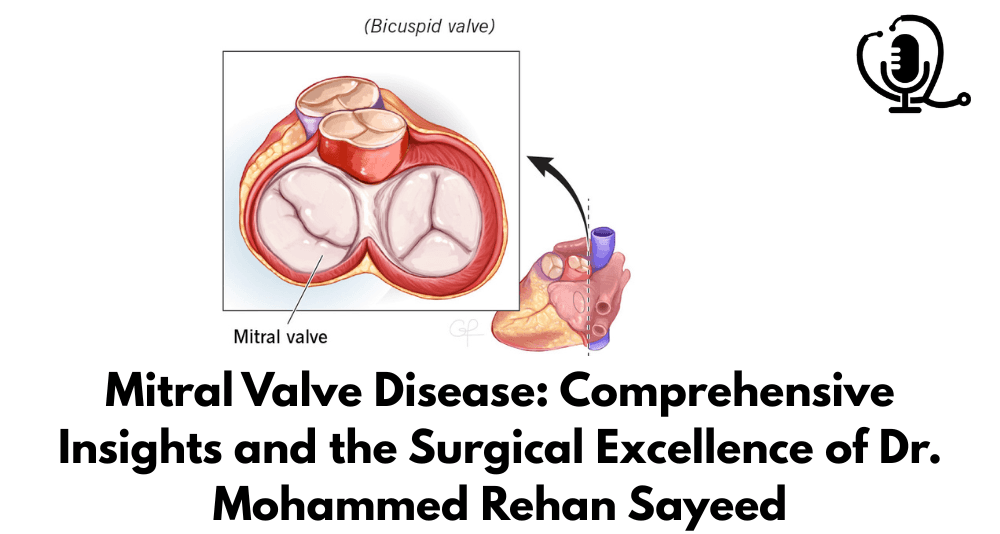
Human hearts are a wonder of engineering in biology, continuously sending blood through the entire body to support the quality of. Of its four valves the mitral valve has an important role in providing a smooth flow of blood across the left atrium and left ventricle. Any malfunction in the function could significantly affect cardiovascular health and performance.
Mitral valve disorders affect millions of people across the globe and are among the most prevalent heart-related conditions seen in the clinical setting. Thanks to advances with medical imaging and surgical procedures and the use of minimally-invasive technology patients now can benefit from better and safer treatments than ever before.
This blog examines mitral valve diseases in detail, while also discussing the contribution and expertise from Dr. Mohammed Rehan Sayeed, one of the top cardiac surgeons, known for his work on complex valve surgeries, minimally invasive techniques and the use of robotic cardiac surgery.
Anatomy and Function of the Mitral Valve
Mitral valves are situated within the left atrium and the left ventricle. It is composed of two leaflets: one annulus, the other chordae tendineae and the papillary muscles. Together, these structures work together to control blood flow in each cycle of the cardiac.
If the left atrium expands the mitral valve is opened so that oxygen-rich blood can be able to flow into the ventricle left. In the event of ventricular contraction the valve shuts to stop blood from flowing backwards. This precise coordination assures maximum performance of the heart and reduces stress to the heart.
What Is Mitral Valve Disease?
Mitral valve diseases refer to any condition where the valve is unable to fully open or close. The dysfunction causes disruption to normal blood flow and requires the heart muscles to perform harder to meet the body's demands. In time the mitral valve condition if not treated can cause heart swelling and arrhythmias, heart failure and other serious problems.
Types of Mitral Valve Disorders
Mitral Regurgitation
It is an illness that develops because the valve isn't able to completely close that allows blood to leak backwards through the left atrium.
Mitral Stenosis
This is when the valve's opening narrows that prevents the flow of fluid to the ventricle.
Mitral Valve Prolapse
An anomaly in the structure that happens when one (or either or both) valve leaflets extend outwards into the atrium during contraction.
Causes and Risk Factors
Mitral valve problems can result from a variety of causes, such as:
Rheumatic fever
Degenerative aging processes
Congenital heart defects
Infections like endocarditis
Ischemic heart disease
Connective tissue disorders
Risk factors include advancing age, an underlying rheumatic disease and high blood pressure and prior heart attacks.
Symptoms and Clinical Presentation
Symptoms may vary depending on severity and progression. Common signs include:
Shortness of breath
Fatigue
Palpitations
Chest discomfort
Swelling in legs or feet
In early stages, patients may remain asymptomatic, which underscores the importance of routine cardiac evaluation.
Diagnostic Evaluation of Mitral Valve Disease
The diagnosis is based on combining a medical examination and advanced imaging techniques like echocardiography. These instruments help to determine the valve's structure and blood flow and the size of the heart chamber, making it possible to intervene quickly.
Natural Progression and Complications
Without proper treatment Mitral valve disease is a condition that can develop silently. The heart's overloaded condition could cause atrial fibrillation heart failure, pulmonary hypertension and stroke.
Non-Surgical Management
Mild cases can be treated by medication aimed at controlling symptoms and reducing risk. However, the medication is not able to correct irregularities in the structure of the valve, and functions principally as supportive treatment.
When Is Surgery Required?
Surgery is recommended when symptoms get worse or heart function decreases or an imaging scan reveals an extensive valve malfunction. A surgical intervention that is performed early often results in better outcomes and helps prevent irreparable heart damage.
Mitral Valve Repair
Repair of the valve focuses on fixing the valve which is a one of. The techniques include reshaping leaflets that repair chordae and also realigning the annulus. Repair is an effective method that lasts a long time and maintains heart functions.
Mitral Valve Replacement
When repairs don't seem viable and replacement is required, replacement becomes the only option. The valve that is damaged must be replaced with a brand new valve, which restores normal circulation of blood.
Mechanical vs Biological Valves
These valves last a long time. However, they require continuous anticoagulants. Biological valves made of animal tissues don't require anticoagulation over long durations however they do require smaller duration. The choice is based on the person's health and their living conditions and any other medical conditions.
Minimally Invasive Mitral Valve Surgery
Minimally-invasive techniques create tiny cuts, resulting in less bleeding, less pain and quicker speedy healing. These procedures require the most advanced surgical understanding and accuracy.
Robotic-Assisted Mitral Valve Surgery
Systems for robotics enable surgeons to make precise movements through small cuts. The improved ability to detect and control makes difficult repairs possible and reduces the risk of injury.
Surgical Outcomes and Recovery
Many patients experience increased symptoms and quality of life after surgery. The time to recover varies, however it's typically shorter when performing robotic or minimally invasive procedures.
Post-Operative Care and Rehabilitation
Cardiac rehabilitation plays a crucial role in the recovery process. It involves regular exercise, nutritional recommendations along with changes in lifestyle to maintain the fitness of your heart.
Long-Term Prognosis and Lifestyle Adjustments
In the event that they receive the right treatment patients can live an active and healthy life which is filled with joy. Regular follow-up and adhering to the prescribed medication and having a vigorous lifestyle are vital.
The Role of Surgical Expertise in Valve Disease
Mitral valve surgeries are among the advanced heart operations. The outcome depends on the experience of the surgeon and the assistance of institutions with the most up-to-date technological advancements.
The Professional Journey of Dr. Mohammed Rehan Sayeed
Dr. Mohammed Rehan Sayeed is an experienced cardiothoracic surgeon and an experienced vascular surgeon who has years of experience in performing complex procedures on the heart. He has performed many heart procedures. He has also held senior roles at some of the top Heart centers of India.
Dr. Sayeed's Contributions to Advanced Cardiac Surgery
His knowledge spans to minimally surgically infected valves and robotic cardiac surgery and coronary bypass procedures including heart transplants, the treatment of children's cardiac disorders. His work has led to the development of the latest standards for cardiac surgery.
Patient-Centric Philosophy and Clinical Excellence
"The Doctor. Sayeed is renowned for his devotion to his patients and for the value of clearly communicating and providing individual treatment plans and an approach to treatment that is compassionate that is backed by the highest technologies.
Future Directions in Mitral Valve Treatment
Future mitral valve procedures are dependent on further technological advances in imaging, robotics in tissue engineering, and individualized health treatment. Continuous innovation will improve outcomes and reduce the risk of surgical procedures.
Mitral valve issues can be serious, but they are treatable by skilled experts. Modern surgical methods have changed treatments for patients which has resulted in more effective outcomes and quicker healing.
This work by Dr. Mohammed Rehan Sayeed exemplifies the highest standards in the field of contemporary cardiac surgery. It comprises the most modern technology, knowledge and experience with a focus on patient-centered care. The efforts of Dr. Mohammed Rehan Sayeed continues to impact the ever changing world of mitral valve surgeries. It offers hope and healing to many people.
Frequently Asked Questions (FAQs) on Mitral Valve Disease and Treatment
1. What is the mitral valve and why is it important?
The mitral valve is one of the four valves of the heart. It is located between the left atrium and the left ventricle and ensures that oxygen-rich blood flows in one direction. Proper functioning of the mitral valve is essential for maintaining efficient circulation and preventing strain on the heart.
2. What is mitral valve disease?
Mitral valve disease occurs when the mitral valve does not open or close properly. This can lead to either restricted blood flow or backward leakage of blood, causing the heart to work harder and potentially leading to serious complications if left untreated.
3. What are the main types of mitral valve disease?
The three most common types are:
Mitral regurgitation, where blood leaks backward due to improper valve closure
Mitral stenosis, where the valve opening becomes narrowed
Mitral valve prolapse, where the valve leaflets bulge backward during heart contraction
Each type varies in severity and treatment approach.
4. What causes mitral valve disease?
Mitral valve disease can be caused by rheumatic fever, age-related degeneration, congenital heart defects, infections of the heart valves, heart attacks, or connective tissue disorders. In some cases, the cause may not be clearly identifiable.
5. What symptoms should raise concern for mitral valve problems?
Common symptoms include shortness of breath, fatigue, palpitations, chest discomfort, dizziness, and swelling in the legs or feet. Some patients may remain symptom-free in early stages, which is why routine heart evaluations are important.
6. How is mitral valve disease diagnosed?
Diagnosis is primarily made through echocardiography, which allows doctors to visualize valve structure and blood flow. Additional tests may include electrocardiograms, chest imaging, and cardiac catheterization, depending on the case.
7. Can mitral valve disease be managed without surgery?
Mild cases can often be managed with medications to control symptoms and reduce strain on the heart. However, medications cannot correct structural valve problems, and surgery may eventually be required if the condition progresses.
8. When is surgery necessary for mitral valve disease?
Surgery is recommended when symptoms become significant, valve dysfunction is severe, or heart function begins to decline. Early surgical intervention often leads to better long-term outcomes.
9. What is the difference between mitral valve repair and replacement?
Mitral valve repair preserves the patient’s own valve and restores its normal function. Replacement involves removing the damaged valve and implanting an artificial one. Repair is generally preferred when feasible due to better preservation of heart function.
10. What are the advantages of mitral valve repair?
Valve repair offers several benefits, including better long-term heart function, lower risk of complications, reduced need for lifelong blood-thinning medications, and improved survival rates compared to valve replacement in many cases.
11. What types of valves are used in mitral valve replacement?
There are two main types:
Mechanical valves, which are long-lasting but require lifelong anticoagulation
Biological valves, made from animal tissue, which do not usually require long-term anticoagulation but may need replacement after several years
The choice depends on age, lifestyle, and medical considerations.
12. What is minimally invasive mitral valve surgery?
Minimally invasive surgery uses small incisions instead of a full chest opening. This approach reduces pain, blood loss, hospital stay, and recovery time while maintaining excellent surgical outcomes.
13. Is robotic mitral valve surgery safe?
Robotic-assisted surgery is safe when performed by experienced surgeons. It allows enhanced precision, better visualization, and minimal tissue trauma, often leading to faster recovery and improved cosmetic results.
14. How long does recovery take after mitral valve surgery?
Recovery varies depending on the surgical approach and individual health. Most patients resume normal activities within a few weeks after minimally invasive or robotic surgery, while traditional surgery may require a longer recovery period.
15. Will I need long-term follow-up after mitral valve surgery?
Yes. Regular follow-up is essential to monitor heart function, valve performance, and overall cardiovascular health. Long-term care helps ensure lasting surgical success.
16. Can patients live a normal life after mitral valve surgery?
Most patients experience a significant improvement in symptoms and quality of life after surgery. With proper follow-up, medications, and lifestyle changes, many return to normal daily activities.
17. What lifestyle changes are recommended after mitral valve treatment?
Healthy eating, regular physical activity, weight management, blood pressure control, smoking cessation, and stress reduction are strongly recommended to support long-term heart health.
18. Why is surgeon experience important in mitral valve surgery?
Mitral valve surgery is technically complex. Outcomes are strongly influenced by the surgeon’s experience, skill in valve repair techniques, and familiarity with minimally invasive and robotic approaches.
19. What makes Dr. Mohammed Rehan Sayeed a leading expert in mitral valve surgery?
Dr. Mohammed Rehan Sayeed is widely recognized for his expertise in complex cardiac surgeries, including mitral valve repair and replacement, minimally invasive procedures, and robotic cardiac surgery. His extensive experience and patient-centered approach contribute to excellent surgical outcomes.
20. What advancements are shaping the future of mitral valve treatment?
Advancements include improved imaging techniques, robotic-assisted surgery, minimally invasive tools, better valve materials, and personalized treatment strategies aimed at improving safety and long-term results.