Jan 8, 2026
Managing Endocarditis: Where Medical Therapy Meets Advanced Cardiac Surgery


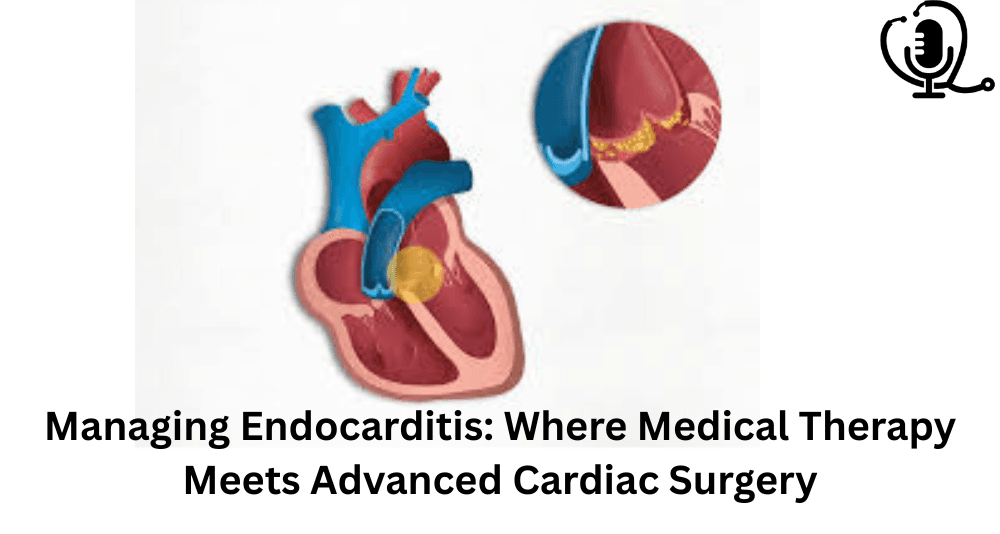
The condition of infectious endocarditis (IE) is among cardiovascular medicine's more dramatic multidisciplinary disorders which involves an invasion of microbial species on the heart's surface known as the endocardial typically valves that could cause severe damage to the valves emboli systemic as well as heart failure, and even death if it is not detected and treated immediately. While IE is not as common to other cardiovascular conditions, its medical complexity, its high mortality and morbidity as well as the changing epidemiology and the need for long-term antimicrobial treatment and occasionally urgent surgery makes it a subject where the most current guidelines and coordinated care are vital. Recent guidelines updates and extensive reviews have refined the diagnostic approach and emphasized an endocarditis team model and emphasized the importance of modern imaging and multidisciplinary decisions.
This blog discusses the pathophysiology, epidemiology and diagnosis strategy, clinical presentation as well as surgical and medical management of prevention, as well as practical clinical pearls. It is then a look at how modern heart surgical teams (with a particular focus on valve-preserving and minimally invasive methods) can improve the outcomes of patients as illustrated through the research by the Dr. Mohammed Rehan Sayeed, an experienced cardiothoracic surgeon who has expertise in valve surgery as well as minimally invasive methods.
Epidemiology and the reason why IE is important
Infective endocarditis continues to be a grave disease that has a high risk of death. The prevalence estimates vary across regions as well as over time however most high-income areas report increasing or stable rates, caused by aging populations as well as more invasive cardiac procedures and electronic devices that can be implanted into the heart such as prosthetic valves and the ongoing use of intravenous drugs in certain groups. The mortality rate in hospitals is still the double digits, while 1-year mortality rates are high for a number of populations, which underscores the importance of early detection and coordinated treatment
The most important change in epidemiology that we should be aware of are:
The classic "younger patient with rheumatic valve disease" profile has shifted in many regions to older patients with degenerative valve disease, prosthetic valves, and healthcare-associated infections.
Staphylococcus aureus (including MRSA) and Enterococcus species have become prominent causes, particularly in healthcare-associated and device-related infections.
The intravenous use of drugs is an important risk element when it comes to right-sided IE in a range of configurations.
The pathophysiology of how a valve can become infected
IE generally is a result of endothelial injury to the cardiac structures as well as the presence of bacteremia. The flow of turbulent blood (from an abnormality in the birth or degenerative valve disorder or prosthetics) or direct trauma to the endothelial system causes the deposition of platelets and fibrin, creating the sterile "nonbacterial thrombotic endocarditis." If bloodstream bacteria are attracted to a nidus they are able to proliferate, and eventually form vegetations -aggregations made up of fibrin, bacteria platelets and inflammation cells. Vegetations can damage valve leaflets and cause regurgitation. They also seed distant emboli (brain the spleen, kidneys and skin) and create perivalvular abscesses, which can cause conduction problems or block the heart. Certain organisms (e.g., staphylococci, enterococci) are particularly destructive and can cause rapid clinical degradation.
Clinical presentation is an unidentified disguiser
IE may manifest in a subdued or catastrophic manner. The classic symptoms (changing murmurs and fever, embolic phenomenon and splenomegaly Osler lymph nodes Janeway thermoplasia) are useful when they occur, but many patients particularly immunocompromised or older patients have non-specific symptoms like anorexia, malaise, fever weight loss or even new heart failure. The symptoms that are acute (high fevers and sepsis, as well as rapid destruction of the valve) tend to be related to virulent bacteria (S. aureus) and subacute episodes (low-grade fevers, long-lasting constitutional symptoms) could indicate less aggressive organisms such as viridans group streptococci, or the HACEK group. Since the presentation can vary so greatly the clinician must keep an extremely high level of suspicion among patients at risk.
Diagnostic criteria for diagnosis Microbiology, imaging, and diagnosis
Diagnostics are based on synthesizing microbiology, imaging, as well as clinical signs. Modified Duke criteria are still frequently used to classify patients (definite and possible, or rejected) by combining the most important criteria (positive blood tests with typical organisms or evidence of endocardial involvement in echocardiography) as well as minor criteria (predisposing factors such as fever, vascular manifestations and immunologic manifestations, as well as non-diagnostic blood tests). These criteria, however, are an outline of the modern method that integrates the latest imaging techniques and a multidisciplinary team.
Microbiology and blood cultures
Obtain multiple sets (typically 3 sets from separate venipunctures) before starting antibiotics unless immediate therapy is required.
Cultures guide organism-directed therapy; culture-negative IE can occur for prior antibiotic exposure or fastidious organisms and often requires serology or molecular testing.
Echocardiography
Transthoracic echocardiography (TTE) is the first-line imaging; transesophageal echocardiography (TEE) is more sensitive for vegetations, prosthetic valve infection, and perivalvular extension. TEE is generally recommended when suspicion is high or initial TTE is nondiagnostic. Repeating imaging can be necessary if clinical courses change.
Advanced imaging
Cardiac CT, PET-CT (FDG-PET), and MRI can help detect perivalvular abscesses, prosthetic valve infection, and systemic emboli, and are increasingly incorporated into diagnostic algorithms, especially in prosthetic valve IE and when echocardiography is inconclusive. The latest ESC guidelines explicitly recognize the role of multimodality imaging in difficult cases.
Medical Management targeted and prolonged antimicrobial therapy
When IE is discovered, treatment is based on the identification of pathogens and long-term, high-dose antimicrobial treatment for the parenteral system that is specific to the susceptibility of the organism and the infected substratum (native prosthetic vs native valve, the intracardiac device). Common principles:
Select bactericidal agents in doses suitable for endovascular infections (often up to 4-6 weeks for prosthetic valves IE).
Take into consideration the possibility of synergistic combinations (e.g. beta-lactam and aminoglycoside or glycopeptide and rifampicin to treat the treatment of staphylococcal prosthetic valve infections certain situations) in accordance with pathogens and guidelines.
Check for toxicities from drugs (renal function in aminoglycosides or bone marrow stimulation with certain agents, etc.).
Modify the treatment of patients with negative culture or fungal infections (fungal I.E. often requires surgical intervention and antifungal treatment).
Expert advice and evidence-based algorithmic approaches (infectious diseases, cardiology and heart surgery) are essential since treatment decisions can be ambiguous.
When to perform surgery - guidelines for surgical procedures and timeframes
Surgery in IE is designed to eliminate tissues that are infected, repair and replace valves damaged, deal with complications (heart failure or uncontrolled infection, perivalvular expansion) and stop embolic events in certain situations. Commonly, the indications include:
Heart failure caused by massive valvular regurgitation or obstruction.
Uncontrolled infection that is not controlled (persistent bacteremia, growing vegetations, abscess formation and fistulae).
Preventing embolism in patients who have large moving vegetations (especially the left side).
Prosthetic valve endocarditis accompanied by dehiscence or perivalvular expansion.
The timing is determined by the individual depending on the situation. Emergency (within 24-hours) for life-threatening conditions (severe heart failure, sepsis that is not controlled) and urgent (days) in cases where the risk of waiting is highly optional when infection is treated and optimized. It is recommended that the 2023 ESC guidelines as well as other recent reviews stress collaboration between multidisciplinary "endocarditis teams" for shared decision-making on timing and treatment.
surgical techniques, postoperative and postoperative issues
Operative management can differ in scope, ranging from replacing valves (preferred whenever feasible) to more complicated repair and replacement of valves (mechanical and bioprosthetic) and treatment of abscesses with debridement, as well as removal of devices when necessary. Restoring valves as frequently as is possible will help keep tissues that are natural and can be advantageous. However, invasive infections and perivalvular abscesses generally require replacement of prosthetics as well as prosthetic reconstruction.
The patients who undergo surgery may require:
To prolong the duration for which you are able to continue the antimicrobial treatment directed at the pathogen for the prescribed duration.
Monitoring to see if there are ongoing infection, prosthetic problems, issues with the blood flow bleeding thromboembolic incidents.
Collaboration with infectious diseases and cardiology and rehabilitation.
Endoscopic and minimally invasive techniques to repair valves have improved over the last twenty years. When performed by experienced teams, this method can minimize the size of the wound as well as speed up healing for some patients, even when more severe infections might require sternotomy, based on the structure of the patient as well as the necessity for more intensive debridement.
Prevention -who requires prophylaxis?
The use of antibiotics in the form of guidelines-directed prophylaxis for dental and other procedures that are invasive is only recommended for patients with the greatest risk (e.g. prosthetic heart valves, previous IE or other congenital heart conditions and cardiac transplant recipients who have the condition of valvulopathy). The routine prophylaxis of all patients isn't advised. Equally important are infection control measures for healthcare-associated bacteremia (line care, aseptic technique) and harm-reduction strategies for people who inject drugs.
The endocarditis team - why multidisciplinary care is crucial
A common, well-supported theme in current guidelines is the team for endocarditis which includes Cardiology, heart surgery microbiology, infectious disease specialist in image analysis, frequently crucial care and neurology. This team enhances diagnosis accuracy, improves the timing of surgeries and coordinates lengthy complex treatment plans as well as resulting in improved outcomes in observational series. In 2023, the ESC guideline outlines this team-based model for the modern IE treatment.
Clinical lessons and dangers
Always take multiple blood cultures prior to the use of antibiotics, if possible.A treatment based on culture can save lives.
Do not assume that a normal TTE will rule out In the event that there's a suspicion in the clinical area you should seek a TEE or a more advanced imaging.
The early involvement of heart surgery and infectious diseases aids in making a better decision about the timing of surgery.
Examine the presence of unusual species (fungi, Coxiella, Bartonella) in cases that are culture-negative and test for serology or molecular sensitivity when needed.
Be on the lookout for neurologic and embolic complications. Neurologic imaging is frequently required prior to heart surgery to determine the risk.
Spotlight: The importance of cardiac surgeons as well as minimally restrictive techniques featuring the Dr. Mohammed Rehan Sayeed
Cardiac surgeons are essential to IE treatment whenever operating therapy is needed. In addition to the traditional full-sternotomy approach numerous centers offer minimally-invasive valve surgery, endoscopic valve repair and specific reconstructive procedures which require skilled surgical expertise as well as multidisciplinary perioperative care.
One surgeon who is actively involved in the advancement of techniques for valve repair and less invasive procedures is Dr. Mohammed Rehan Sayeed. The professional profile of Mohammed Rehan Sayeed (personal website as well as listing of hospitals, CTSNet profile) describe the career path he has taken in cardiothoracic surgeons with a range of training including advanced fellowships as well as experience in complicated adult heart surgeries, valve surgeries and minimally invasive procedures. These profiles show his involvement in a variety of valve surgeries (aortic or mitral and tricuspid) with a particular emphasis on improving outcomes for patients with less invasive techniques whenever appropriate, and involvement in heart-failure as well as assist device care throughout his clinical and training
Does his job contribute to the treatment of endocarditis?
The experience in the area of valve surgical surgeons such as Sayeed doctor. Sayeed, with dedicated expertise in repair of valves as well as replacement, are vital in the treatment with surgery for IE. Their abilities are particularly important when repair (rather than replacement) is feasible or an intricate reconstruction is needed following debridement.
Procedures that are minimally invasive in cases where the nature and the severity of the infection permit minimally-invasive valve surgery. can reduce postoperative pain, lessen hospital stay and ICU stays and also speed up the healing process following impaired function. However, infections usually require a long exposure, therefore the procedure has to be customized for the individual. Surgeons who are experienced in the open procedure and those that use minimally-invasive techniques could modify the procedure to enhance the process of repair and debridement without causing any trauma to the patient.
Multidisciplinary Leadership leaders who manage or are employed in "heart centers" and multidisciplinary teams help coordinate complex IE healthcare that ranges from imaging, preoperative optimization, as well as postoperative antibiotic strategies, and Rehabilitation. Dr. Sayeed's profile focuses on his medical activities and involvement in the design of programs that are aligned with an approach based on teamwork.
How surgeons such as the Dr. Sayeed approach a hypothetical endocarditis scenario
Take into consideration a left-sided native valve IE patient who has large aortic vascularization that is causing regurgitation to worsen, as well as symptoms of early heart failure:
A multidisciplinary overview cardiovascular disease infectious disease heart surgery, imaging in order to determine diagnosis as well as determine timing.
The microbiology of stabilization The first step is to begin with antibiotics for emphasis after blood culture to target therapy after the blood cultures are complete.
Surgery urgently if needed for excessive regurgitation leading to heart failure or an abscess in the perivalvular region is present. The surgeon should plan a suitable treatment for valve replacement and debridement. If the anatomy and the infection allow the repair of a valve or a customized minimal-access strategy can be utilized; however, if significant damage is present the need for durable reconstruction and replacement are preferred.
Post-operative treatment Extended IV antibiotics and wound treatment rehabilitation, as well as the follow-up of imaging and labs to ensure that eradication is achieved.
Surgeons with expertise across the entire spectrum -- open sternotomy, keyhole and endoscopic procedures -- offer a variety of options that are adapted to the specific needs of patients.
Teaching, research and dissemination why surgeon profiles that are public-facing matter
Websites for doctors bios of hospitals, professional networks webpages (like CTSNet) inform patients and the referring physician about a surgeon's area of expertise, their training background, and focus on the procedure. For multidisciplinary issues such as IE Transparency about the capabilities (e.g. experiences with valve repair and complex aortic surgeries and minimally invasive techniques) assists referring teams in directing patients to the appropriate surgical centers and surgeons. Dr. Sayeed's presence on the internet and media appearances emphasize his research interests and his public involvement in the field of heart diseases and minimally invasive methods
Future directions for IE care
Many emerging areas influence the direction of IE management:
Increased utilization of molecular diagnostics and next-generation sequencing to treat cases that are culture-negative.
The widespread use of multimodality imaging (PET-CT, CT, MRI) to identify the presence of a prosthetic valve and other complications of the perivalvular system.
Innovative antimicrobial stewardship strategies and improved drugs for resistant organisms as well as fungal infections.
Improvement of surgical procedures Prosthetic materials, as well as strategies that balance the control of infection with the long-term function of valves and recovery of patients.
The focus will remain on the endocarditis team along with a regional network of referral to focus the experience and enhance outcomes.
Infective endocarditis can be a complicated interaction of the valve, pathology as well as systemic complications and the therapeutic trade-offs. The successful treatment requires prompt recognition, good microbiology and imaging, long-term antimicrobial therapy, precise indications for surgery, and -frequently -an experienced and skilled cardiac surgical team that can perform complicated reconstructions and minimally invasive alternatives when necessary. Recent guidelines and reviews stress the importance of multidisciplinary teams for endocarditis to improve outcomes. Patients and clinicians are benefited when surgeons who have deep valve expertise -- such as surgeons similar to Dr. Mohammed Rehan Sayeed, who concentrates on valve disease and minimally invasive techniques, works closely with imaging and infectious disease specialists to customize treatment for every patient.
Frequently Asked Questions (FAQs) on Endocarditis
1. What is endocarditis?
Endocarditis is a serious infection of the inner lining of the heart (endocardium), most commonly affecting the heart valves. It occurs when bacteria, fungi, or other microorganisms enter the bloodstream and attach to damaged heart tissue or artificial material such as prosthetic valves.
2. What causes endocarditis?
Endocarditis is usually caused by bacteria entering the bloodstream through:
Dental procedures or poor oral hygiene
Infected intravenous lines or catheters
Intravenous drug use
Skin infections or wounds
Certain medical or surgical procedures
People with abnormal or artificial heart valves are at higher risk.
3. Who is most at risk of developing endocarditis?
High-risk individuals include:
Patients with prosthetic heart valves
Those with a history of previous endocarditis
People with congenital heart disease
Patients with implanted cardiac devices
Individuals who inject drugs
Elderly patients or those with weakened immune systems
4. What are the common symptoms of endocarditis?
Symptoms can vary and may develop gradually or suddenly. Common signs include:
Persistent fever and chills
Fatigue and weakness
Shortness of breath
New or changing heart murmur
Night sweats
Weight loss
Skin changes such as small red or purple spots
Because symptoms are often nonspecific, diagnosis may be delayed.
5. How is endocarditis diagnosed?
Diagnosis involves a combination of:
Multiple blood cultures to identify the infecting organism
Echocardiography (TTE or TEE) to detect valve infection or vegetations
Blood tests showing inflammation or infection
Advanced imaging (CT, PET-CT, MRI) in complex or prosthetic valve cases
Clinical judgment and multidisciplinary evaluation are essential.
6. Is endocarditis life-threatening?
Yes. Endocarditis is a potentially life-threatening condition if not treated promptly. Complications can include heart failure, stroke, systemic embolism, valve destruction, and sepsis. Early diagnosis and appropriate treatment significantly improve survival.
7. How is endocarditis treated?
Treatment typically includes:
Prolonged intravenous antibiotics (usually 4–6 weeks)
Targeted therapy based on the identified organism
Close monitoring for complications
In many cases, cardiac surgery is required to repair or replace damaged valves or remove infected tissue.
8. When is surgery needed for endocarditis?
Surgery may be necessary when there is:
Severe valve damage causing heart failure
Persistent infection despite antibiotics
Abscess formation or valve destruction
Large vegetations with high risk of stroke
Infection of prosthetic valves or cardiac devices
The timing of surgery is carefully decided by a multidisciplinary endocarditis team.
9. Can endocarditis be treated with minimally invasive surgery?
In selected patients, minimally invasive or endoscopic valve surgery may be an option. Surgeons with expertise in advanced valve techniques—such as Dr. Mohammed Rehan Sayeed—may offer tailored surgical approaches depending on infection severity, valve involvement, and patient condition. However, extensive infections may still require traditional open surgery to ensure complete removal of infected tissue.
10. Can endocarditis come back after treatment?
Yes, recurrence is possible, especially in high-risk individuals. Completing the full course of antibiotics, adhering to follow-up care, and managing risk factors (such as dental hygiene and intravenous access) are crucial to prevent recurrence.
11. Can endocarditis be prevented?
While not all cases are preventable, risk can be reduced by:
Maintaining good oral and dental hygiene
Using antibiotic prophylaxis before certain procedures in high-risk patients
Proper care of intravenous lines and catheters
Avoiding intravenous drug use
Regular medical follow-up for known heart conditions
12. What is an “endocarditis team”?
An endocarditis team is a multidisciplinary group that typically includes cardiologists, cardiac surgeons, infectious disease specialists, microbiologists, and imaging experts. This team-based approach improves diagnosis, treatment decisions, surgical timing, and overall patient outcomes.
13. What is the long-term outlook after endocarditis?
Prognosis depends on:
Early diagnosis
Type of infecting organism
Presence of complications
Need for and success of surgery
Overall patient health
With modern antibiotics, advanced imaging, and expert surgical care, many patients recover and return to good quality of life.