Dec 8, 2025
How Aging Affects the Aorta and Ways to Keep It Strong

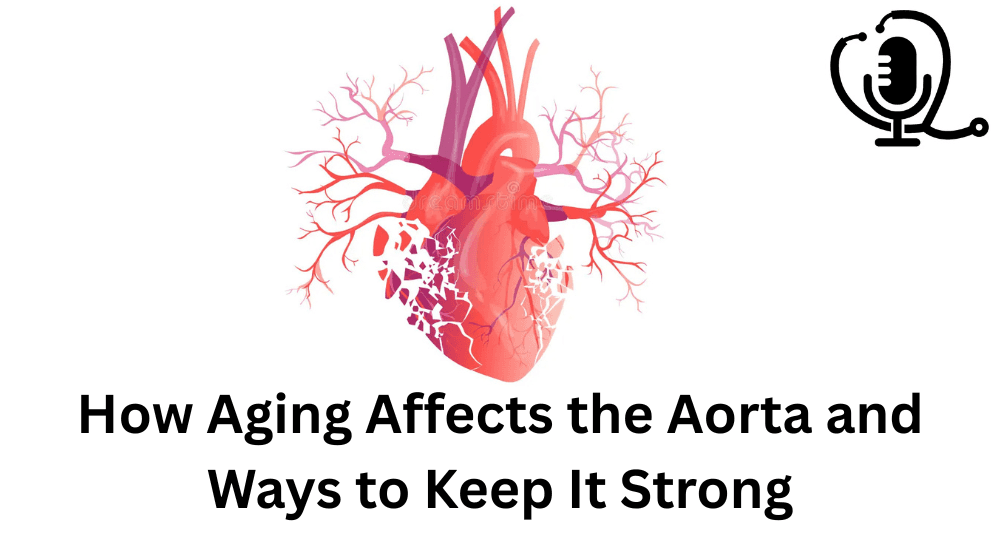
The Aorta is your cardiovascular system's undiscovered hero. The largest artery of the body and the main high-pressure conduit that is responsible for receiving every beat of blood oxygenated from the left ventricle in the heart and spreading it across the entire body. From your organs and the brain, all the way to your feet, the Aorta assures a continuous strong supply of vital blood. It is an amazing feat of biological engineering, sporting an extremely muscular, thick, and extremely elastic wall that can withstand massive pressure variations and ensure an efficient flow.
Like any other device, the aorta is susceptible to wear throughout its period. As we age, it puts on inevitable physical and cellular strains that eventually weaken the elasticity, strength and health of this crucial blood vessel. This decline due to age, also known as arteriosclerosis, or "hardening of the arteries," isn't just an indication of aging and is a serious risk factor that is the basis for the majority of major cardiovascular events such as heart attack stroke, stroke, and Aortic catastrophic failures.
Understanding the way ageing fundamentally changes the aorta will be the very first thing towards an effective and proactive health management. If we can recognize the cause of the disease, we are able to strategically apply targeted medical and lifestyle changes ranging from specific dietary decisions to more advanced surgical screenings to limit the risk and ensure that this primary pipeline is strong and durable throughout the rest of our lives. This thorough guide will examine the exact mechanisms behind the aging of your aortic and provide the most comprehensive, current method to maintain your heart health.
Arterial Stiffness Why the Aorta is less elastic as we age
The indication of aortic aging is stiffness of the arterial wall and stiffness. This is known as arteriosclerosis in scientific terms. Aortic stiffness is a sign of ageing. Aorta in a young and healthy person functions as a flexible chamber that can absorb shocks - it's a Windkessel (German term meaning "air chamber"). When the heart contracts, the elasticity of the heart allows the Aorta to expand temporarily and store some blood's energy, smoothing the flow, and also allowing an uninterrupted circulation of blood tissues in the peripheral areas, even during the period that is relaxation (diastole).
As we age the elasticity of our vital organs decreases dramatically. The changes are observable on a microscopic scale inside the Aortic wall:
The Collagen Overload Balance collagen and elastin (the elastic rubber band-like proteins) along with the collagen (the stiff structural protein) alters drastically. The Aorta's middle layer, known as the media, is susceptible to disintegration and eventually the loss of elastin fibers. In turn, there is an increased collagen production and a growth of collagen that is stronger and more cross-linked. Imagine it as a rubber hose which is becoming an elastomer pipe that is fragile.
Smooth Muscle Cells Change Smooth muscles cells (SMCs) located within the aortic wall undergo senescence and start to alter their roles that cause inflammation and the accumulation of excess extracellular matrix components and in squeezing the artery.
Higher Pulse Wave Velocity (PWV) is the most widely used measure of aortic stiffness is an evaluation of the Pulse Wave Velocity (PWV)--the rate at which the pressure wave is moving through into the Aorta. In the event that you have a strong, elastic aorta it is likely that the pressure wave is slow. If the aorta becomes more rigid and the pressure wave moves faster and reaches the heart sooner, possibly being within the Systole (contraction). This reflection creates more strain on the left ventricle. It also decreases blood flow to coronary arteries, decreasing blood flow to the heart muscle.
Arterial stiffness is not necessarily a negative condition. It is directly accountable for an increase in heart rate (the gap between blood pressures diastolic vs diastolic) and is a contributing factor to isolated hypertension in systolic (a frequent disease that is prevalent among older people) and is a major risk factor that can lead to adverse cardiovascular consequences, making the fight against stiffness a key goal of aortic maintenance.
The Silent Threat: Aortic Calcification and Atherosclerosis
Beyond structural stiffness the Aorta faces the threat of advancing to atherosclerosis and the process of calcification which are processes that are nefarious and usually not visible until an event that is critical occurs.
Atherosclerosis is a systemic illness caused by chronic inflammation and the accumulation of fats (fats) and cholesterol and cellular debris in the aortic wall. The deposition creates a structure called the atheromatous plaque.
Plaque Formation The Aorta is exposed at first to harmful elements like blood sugar levels that are high as well as elevated LDL cholesterol, as well as the oxidative stress. The inflammatory response is triggered in the lining ( the endothelium). The immune cells (macrophages) are attracted to the site, inhale cholesterol and then transform into foam cells, forming the appearance of a fat streak. In time, these fat streaks grow into complicated fibrous plaques.
Aortic Calcification The development of these plaques are often followed by the process of calcification which is when calcium is present in the affected regions of the wall of the aorta. This isn't the same thing as bone formation, but instead a pathological condition that restricts the artery's capacity to stretch and also increases its brittleness. Aortic calcification that is severe severely restricts the normal movement of the Aorta throughout the cardiac cycle. It also makes the artery susceptible to rupture or dissection.
The Aorta is able to suffer damage in two primary ways: through the loss of the elasticity (stiffness) and also by the development of fat deposits that are hard and hard to remove (atherosclerosis as well as calcification). Both of these pathways often overlap and work together, creating an ever-strengthening narrowed and fragile vessel. The gradual accumulation of damages is the reason that many emergency aortic ruptures are life-threatening caused by the breaking of a plaque that has been calcified or the breaking of a rigid wall.
From Bulge to Breakdown: Understanding Aortic Aneurysms and Dissection
The gradual shrinking and stiffening of the Aorta created the conditions for the two most crucial and life-threatening aortic diseases that include the aneurysm of the aortic and the dissection of the aortic artery.
Aortic Aneurysms An aneurysm refers to a small, abnormal dilation, or "balloon-like bulge" in the Aorta. The cause is because the cumulative strain and injury (from atherosclerosis, hypertension, or genetic reasons) cause the rupture of connective tissue in the wall of the aortic and allows the tension of blood to force the wall inward.
Aneurysms can be classified according to their place of origin:
Abdominal Aortic Aneurysm (AAA): The cause is within the lower portion of the Aorta located below the diaphragm. It is the most frequent form and is closely associated with smoking and atherosclerosis.
Thoracic Aortic Aneurysm (TAA): Occurs in the chest, whether on the ascending, or descended segments of the Aorta.
The risk of developing an aneurysm is because it tends to grow. As the size increases it is the case that it is believed that the pressure on the walls (according to Laplace's law) increases in a way that is not proportional and can lead to a devastating possibility in the event of rupture. The rupture of the Aorta results in massive, rapid internal bleeding that can be fatal in the majority of instances.
Aortic dissection Aortic Dissection Aortic dissection is, in all likelihood, one of the more dramatic urgent emergency aortic situations. It happens when a tiny tear develops in the lining of the inside (the inner lining) of the Aorta. The blood then flows to the area of tear which causes it to split from the layers that comprise the aortic wall to form another channel (lumen) in a parallel fashion to the actual one.
Type A Dissection The procedure involves the ascending aorta (closest to the heart). It is a surgical emergency because the false lumen could be ruptured into the pericardial sac and restrict coronary arteries and cause a heart attack.
Type B Dissection The descending Aorta. While it's still quite serious the condition is often treated by vigorous blood pressure control.
The risk factors that can cause dissections and aneurysms are basically the same that lead to stiffness and weakness: advanced age, smoking, chronic hypertension and connective tissue conditions (like Marfan syndrome). The ability to recognize invisible or insignificant symptoms - such as a mysterious abdominal or back discomfort (for AAA) or an abrupt, intense, and tear-like pain in the back or chest (for dissection)--is crucial.
Hypertension's Assault: How High Blood Pressure Damages the Aortic Wall
Of all the elements that could accelerate the aging process Aorta, chronic hypertension (high blood pressure) is the most important and easily managed cause of Aortic problems. Hypertension can do more than make the heart pump harder and, more often it also causes constant mechanical harm to the Aorta.
the mechanical overload. The aorta was created to manage the systolic waves that cause pressure. However, should the pressure continue to increase for a long period, the artery's capability to recover becomes overloaded. The pressure rises, causing the strain in the circumferential direction which creates tension inside the aortic wall, which leads to the expansion of. the vessel.
Endothelial Dysfunction Continuous attack of high-velocity, high pressure blood flow can cause harm to the delicate endothelium which is the cell layer of the Aorta. The endothelium plays a key role in the first and foremost element during the progression of atherosclerosis, and stiffening the arterial wall due to it hinders the ability that the inner wall lining releases substances known as Nitric Oxide (NO) which is a vital chemical that helps relax the artery, while ensuring its flexibility.
Accelerated fracture of Elastin physical force generated by high-tension for prolonged periods physically strains fibers of elastin in the Aortic wall. This results in faster degradation and further disintegration. This causes increased wall stiffness and also sets the stage for the emergence of aneurysms.
Higher Pulse Pressure, as stated in the past, hypertension, especially Systolic Pressure, in people who are older could be due to an increased distance between lower (systolic) as well as the higher (diastolic) pressures in the Aorta. The larger range of pressures supplies energy to the whole organs. It is necessary to take in every heartbeat which results with wear and tear on the wall.
The Renin-Angiotensin System (RAS): High blood pressure is often regulated by the Renin-Angiotensin-Aldosterone System (RAS). It is a hormone. Angiotensin II, a powerful part of the system. It does more than just limit blood vessels to raise blood pressure, it also controls fibrosis (scarring) and swelling within inflammation of the Aortic wall. This double action causes hypertension that isn't controlled an injury to the structure, limiting the elasticity and leading to injury to the Aorta from the biochemical and mechanical points from a biochemical point of. A complete and effective controlling blood pressure therefore the most effective remedy for aortic decline which is caused by aging.
Lifestyle as Medicine: The Role of Diet, Exercise, and Stress Management
Although age is an unavoidable fact, the rate at which it takes for the Aorta to become older can be easily controlled through conscious lifestyle decisions. Implementing a holistic plan that incorporates the elements of nutrition, fitness and exercise, and controlling your mental health can alter the course of your vascular health.
The Power of Movement: Exercise for Arterial Elasticity
Regular physical activity can be the best non-pharmacological strategy to maintain the elasticity of the Aorta. Exercise can be effective in many ways:
Nitric Oxide as well as Shear Stress During aerobic exercise (like running, sprinting as well as cycling) the increase in blood flow creates the tension of shear, which is a stress created through the endothelium. The stress triggers the cells of the endothelium release and produce more Nitric Oxide (NO) that is your body's personal vasodilator. The continuous release of NO helps to relax the Aorta and other arterial arteries to increase flexibility and correct endothelial dysfunction.
Blood Pressure Control Regular exercises can be very effective in lowering blood pressure when at rest and reducing the strain placed exerted on the Aorta as discussed in the previous section.
The control of weight and inflammation Exercise is an excellent method to maintain an ideal weight and reduce an ongoing inflammation in the entire body and Aortic inflammation and aortic inflammation, which are the major causes of atherosclerosis, and aortic injuries.
The suggested amount is at minimum 150 minutes or moderately intense aerobic workouts (e.g. walking for 30 mins for five days a week) and 75 mins of intense high intensity workouts each week, with two sessions of strengthening exercises.
Stress Reduction and Sleep: Supporting Systemic Vascular Function
Stress from psychological causes can have negative physiological effects on the Aorta through the continual release of hormonal substances that trigger stress, for example cortisol and adrenaline.
Vascular Reactivity Vasoconstriction can be a consequence of these hormones which cause rapid rises in blood pressure which contribute to the mechanical injury caused to the Aorta. With time, continuous tension can trigger inflammation and hypertension.
Intervention Methods such as mindfulness meditation, deep breathing exercises, diaphragmatic yoga and spending time in nature have been found to affect the sympathetic nervous system which results in lower heart rate at rest and blood pressure.
Similarly, getting enough sleep (7-9 hours every night) is crucial. Sleep deprivation is connected with the continuous activation of the inflammatory pathways, and the rise in blood pressure fluctuations that puts stress on the Aorta and the entire cardiovascular system. It is crucial to prioritise sleep as a way of maintaining the cardiovascular system.
Aortic Rescuers: Key Foods and Nutrients for Vascular Protection
The diet you choose to eat plays an important influence on cholesterol levels, and tension in blood and inflammation and endothelial function as the four essential components of a functioning and healthy heart. A diet with a large amount of "aortic rescuer" nutrients can help maintain the health and function of the aorta.
The Mediterranean and DASH Approaches
The Mediterranean Diet and the DASH (Dietary Strategies to Reduce the Hypertension) The Mediterranean Diet and the DASH (Dietary Strategies to End Hypertension) are the gold standard when it comes to maintaining the condition of arteries. They have many similarities:
The focus will be upon Whole Foods The diet is high in vegetables, fruits, and whole grains and nuts and legumes.
Healthful Fats The emphasis will be on monounsaturated oils (like olive oil) and polyunsaturated fats (like the ones found in fish which are fatty).
Limited processed food items: Restriction of red meat and sodium, in addition to sugars and high-processed carbs.
Key Nutrients for The Aorta
Nutrient Class | Source | Aortic Benefit |
Omega-3 Fatty Acids | Salmon, Mackerel, Walnuts, Flaxseeds | The anti-inflammatory properties of HTML0 helps stabilize plaques from atherosclerosis and also improves the efficacy of the endothelial cells. |
Nitrates/Nitrites | Beets, Leafy Greens (Spinach, Arugula), Celery | The body converts it into Nitric Oxide (NO), which reduces the Aorta and other blood vessels, thereby expanding the flexibility of blood vessels, and reducing BP. |
Dietary Fiber | Oats, Beans, Apples, Whole Grains | It binds with cholesterol in the intestines, reducing cholesterol levels in the LDL range. It also helps control blood sugar levels. |
Potassium | Bananas, Sweet Potatoes, Avocados | blocks sodium's effect, allowing it to ease tension within the Aorta's walls and also lower blood pressure. |
Polyphenols/ Flavonoids | Berries Dark Chocolate (70%+ cacao), Green Tea | Highly effective antioxidants that shield the endothelium that lines the Aorta from damage due to oxidative oxidation as well in inflammation. |
Limiting Sodium and Saturated/Trans Fats:
The most important food restriction is excess sodium and fats which are harmful. Consuming a lot of sodium causes an increase in blood volume which can increase blood pressure and cause the Aorta to function under more mechanical strain. The saturated and trans-fats contribute directly to an increase in LDL (bad) cholesterol that can trigger the development of atherosclerotic plaques in the Aortic wall. Eliminating these two components is an essential step to avoid aortic diseases.
Crucial Check-ups: Screening and Monitoring for Aortic Disease
Because of it being the "silent" nature of many Aortic ailments, such as aneurysms and aneurysms. Regular surveillance and screening is essential, particularly for those in riskier categories. As with other conditions, the capacity to detect aortic dilation or the development of plaques prior to symptoms appearing can be the difference between effective treatment and life-threatening emergencies.
Identifying High-Risk Candidates
Screening to detect Aortic Disease is generally recommended for:
men who are between the ages of 65 and 75 with a history of smoking cigarettes This is the group that has the highest rate of abdomen Aortic Aneurysm (AAA).
people with immediate family members with at least AAA status.
Patients who have been found to be at risk of developing cardiovascular disease are at a higher risk of developing cardiovascular disease: hypertension that is extreme, cholesterol levels that are high, and peripheral arterial disease (PAD) or the presence of coronary artery disease (CAD).
People suffering from known genetic diseases like Marfan syndrome Ehlers Danlos syndrome and the Loeys-Dietz Syndrome which may lead to dissection due to the weakening in connective tissues.
Key Screening and Diagnostic Tools
The cardiologists as well as specialists in vascular surgery employ various non-invasive and advanced imaging techniques to identify the anatomy and function of the Aorta:
Abdominal Abdominal Ultrasound (for AAA Screening):
It's the Gold Standard for AAA: It's a straightforward inexpensive, non-invasive and cost-effective screening instrument that is typically utilized for males who have the greatest risk of smoking cigarettes as mentioned earlier. It measures precisely how large the abdomen Aorta is. If it is greater than 3.0 cm the patient is thought to have an aneurysm. This is a reason to have an exam.
Transthoracic Echocardiography (ECHO):
Ascending Aorta Assessment: Mostly utilized to evaluate the function of the heart it is also used to determine the heart's function. ECHO gives a precise and precise view of the valve that is located within the Aortic region and also its distal (ascending) portion of the aorta near the heart. It is crucial to understand how large the aorta is since dilation in the region is normal, however it can be hazardous when it reaches the point of dissection.
3. Computed Tomography (CT) Angiography and Magnetic Resonance (MR) Angiography:
Details imaging: The most advanced scans provide the most precise high-resolution 3D pictures across the entire length which is known as that is the Aorta (thoracic as well abdominal) and the abdomen). These are essential to:
Diagnoses and Stage The precise determination of the dimension of aneurysms ' size, shape along with size.
surgical plan The anatomical structure is sketched to assess the possibility of an operation using an endovascular device, or an open surgical procedure.
Monitoring Plaque The assessment of the level of plaque
4. Pulse Wave Velocity (PWV) Measurement:
Functional Assessment can be described as a minimally invasive test that examines the elasticity of the Aorta. It is now a crucial test to assess how aging impacts the body and also hypertension. The elasticity of the Aorta is the primary determinant of how much treatment will be required.
A routine professional exam ensures that any loss due to age in the Aorta is detected and treated before it becomes an emergency which could be dangerous to the life of the patient.
Modern Fixes: Endovascular and Surgical Solutions for Aortic Repair
When aging and disease progress to a point where the aorta is compromised typically when an aneurysm grows to a size that significantly increases the risk of rupture--medical intervention becomes necessary. Modern cardiology offers two main ways to fix the weakened section of the Aorta.
Medical Management: Delaying the Need for Intervention
Before the procedure, a salvage procedure is performed to stop or slow the development in an in-situ aneurysm. It also reduces the chance that dissection could occur.
Blood Pressure Control: Using medications like Beta-Blockers and Angiotensin-Converting Enzyme (ACE) Inhibitors to achieve strict blood pressure targets is paramount. This reduces stress on the Aortic wall. ..
Cholesterol-Management Statins have been prescribed to lower LDL cholesterol levels, to increase thickness of the plaques that cause atherosclerosis, and reduce inflammation in the Aorta.
Surgical and Endovascular Repair
An aneurysm is formed when it is above the threshold of what is considered acceptable (e.g. usually 5.0 or 5.5 cm for AAA, or a size determined by the potential risk to the patient identified with TAA) intervention is required.
Open Surgical Repair (OSR):
The most common procedure is OSR is an important procedure that requires cutting open (in the abdomen or chest) to allow access to the Aorta. The surgeon is able to block the vessel, creating an opening in the aneurysmal sac. They remove the affected segment, and then substitute the affected segment with a fake vascular tissue (a solid web tube ).
Benefits HTML0 advantages Quality and durability. Ideal for aneurysms with a lot of complexity and the dissection.
Benefits: A lengthy recovery time and intense strain upon the physique.
Endovascular Aneurysm Repair (EVAR) / Thoracic Endovascular Aortic Repair (TEVAR):
A minimally invasive method It is the most commonly used treatment for aneurysms that are suitable. The procedure involves several cuts in the stomach. A catheter is passed through the arteries to the Aorta. Then, a STENT-Groat (a tube of fabric that is supported by a framework constructed of metal) is then inserted into the aneurysm.
Mechanisms when put in the stent, it is able to create an inner lining that redirects circulation away from damaged walls of the aortic. The aneurysm thus lowers its pressure, and is able to shrink or even be stabilized.
Its advantages The least amount of incisions and faster recovery time, which means less discomfort and a shorter hospital stays.
Advantages It needs regular tests (CTs) to ensure that the transplant is sealed, and blood does not leak out of the back of the Aneurysm (an endoleak).
The choice from OSR, EVAR/TEVAR or both is based on the overall health of the patient, as well as the anatomical characteristics (e.g. neck shape, size, or location) which are typical of the anatomy that is associated with an aneurysm. The Aorta.
The Minimal Access Advantage: Advances in Aortic and Valve Surgery
The specialization in cardiac surgery has led to significant advances that help the ageing Aorta and its key component which is the Aortic valve. These minimal access procedures dramatically speed up recovery times for patients and enhance outcomes for high-risk patients.
Transcatheter Aortic Valve Replacement (TAVR)
Aortic stenosis, which is the narrowing of the Aortic valve opening is a common age-related, calcific condition. In the past, it was a requirement for open heart surgery.
The TAVR Revolution: TAVR allows for an entirely new valve to be implanted via an incision through a catheter (usually through a tiny incision inside the chest or leg) and then placed inside the damaged the native valve of the aortic. This forces the old valve leaflets out of the way and restores normal circulation of blood from the heart to the Aorta.
The impact: TAVR has become the norm of care for many older and high-risk patients providing a life-saving treatment that requires only two days of recovery in hospitals, not weeks.
Minimal Access Aortic Surgery
In the case of certain aneurysms in the aorta (especially those in the ascending aorta close to the heart) and more complex valve repairs surgeons are increasingly using techniques that require minimal access in comparison to more traditional full sternotomy (chest breaking).
Mini-Sternotomy, also known as Mini-Thoracotomy. In lieu of making a lengthy cut, the surgeon is able to access the Aorta by making a small or partial cut inside the sternum, or through a tiny cut between the ribs.
Advantages This technique results in a decrease in blood loss, less postoperative discomfort, quicker healing of the wound and faster return to normal activities. This is particularly beneficial for older patients, since complications and lengthy recovery times that are common to traditional open surgeries pose an increased risk.
The future of treating the ageing aorta is within this continuum of care that includes aggressive lifestyle modifications and medical therapy to stop the development of disease, advanced imaging to identify silent diseases early and minimally invasive procedures (like the EVAR/TEVAR or TAVR) to fix damages with the least cost to the patient. When we embrace this approach it will increase the resilience of the Aorta and will be maintained by securing the foundation of our circulatory health for the rest of our lives.
The Aorta is the mainstay of heart health. As it gets older it experiences inevitable structural changes - calcification, stiffness and weakening that can cause catastrophic incidents like dissections or aneurysms. But, these aging-related changes aren't inevitable. With a proactive and coordinated approach, we can greatly influence the course of the aortic aging process.
The most effective tools are the strict control of blood pressure as well as a healthy diet that is rich in antioxidants for the aorta as well as regular physical exercise to maintain the elasticity of the arterial wall. For those with a higher risk of developing heart disease, regular screenings using devices such as imaging and CT are life-saving tools that cannot be negotiated. By combining these well-established preventative measures with the latest techniques for surgery that are less invasive to ensure that this essential life-sustaining pipeline-the aorta the Aorta--remains robust and able to sustain well-being and health into late years. Your commitment to your health and vascular wellbeing is an investment in your longevity and quality of life.
Frequently Asked Questions (FAQs)
1. What is arterial stiffness, and why is it dangerous for the aorta?
A: Arterial stiffness (arteriosclerosis) is the loss of elasticity in the aortic wall due to the breakdown of elastin fibers and the buildup of rigid collagen over time. This makes the aorta less able to absorb pressure, leading to higher blood pressure (especially systolic hypertension) and placing immense strain on the heart muscle.
2. How does aging physically damage the aorta beyond just stiffness?
A: Aging accelerates atherosclerosis and calcification. Atherosclerosis involves the accumulation of fatty plaques within the aortic wall, while calcification is the deposition of calcium in the diseased area. Both processes make the aorta brittle and susceptible to tearing and plaque rupture.
3. What is the difference between an aortic aneurysm and an aortic dissection?
A: An aneurysm is a localized, abnormal bulge or ballooning in the aortic wall, caused by chronic weakening. A dissection is a catastrophic event where a small tear allows blood to split the layers of the aortic wall, creating a false channel. Dissection is a medical emergency with extremely high mortality.
4. Is high blood pressure the biggest controllable risk factor for aortic damage?
A: Yes. Chronic hypertension causes direct mechanical trauma to the inner lining (endothelium) of the aorta. This relentless force accelerates elastin fragmentation and promotes inflammation, making blood pressure control the single most crucial non-surgical intervention for protecting the aorta.
5. What types of exercise are best for maintaining aortic elasticity?
A: Aerobic exercise (like brisk walking, running, or cycling) is key. The increased blood flow during these activities generates shear stress on the aortic lining, stimulating the release of Nitric Oxide (NO), which helps relax and maintain the flexibility of the aorta.
6. Are there specific foods I should eat to protect my aorta?
A: Focus on foods rich in Nitrates (e.g., beets, leafy greens) to boost NO production, and Omega-3 Fatty Acids (e.g., fatty fish) for their anti-inflammatory effects. Adopting the Mediterranean or DASH diets—high in fiber, whole grains, and healthy fats—provides the best overall protection.
7. When should I be screened for an Abdominal Aortic Aneurysm (AAA)?
A: Routine screening is strongly recommended for all men aged 65 to 75 who have a history of smoking (even if they quit). Screening is also advised for individuals with a family history of aortic aneurysms or connective tissue disorders. The primary screening tool is a simple abdominal ultrasound.
8. What are the modern treatment options if a repair is needed?
A: The preferred approach for many aneurysms is Endovascular Aneurysm Repair (EVAR/TEVAR). This minimally invasive procedure involves inserting a stent-graft through a catheter (usually via the groin) to reline the aorta internally. For complex cases, traditional Open Surgical Repair (OSR) remains an option.