Dec 24, 2025
Coronary Artery Bypass Grafting (CABG): A Comprehensive Guide with Insights from Dr. Mohammed Rehan Sayeed

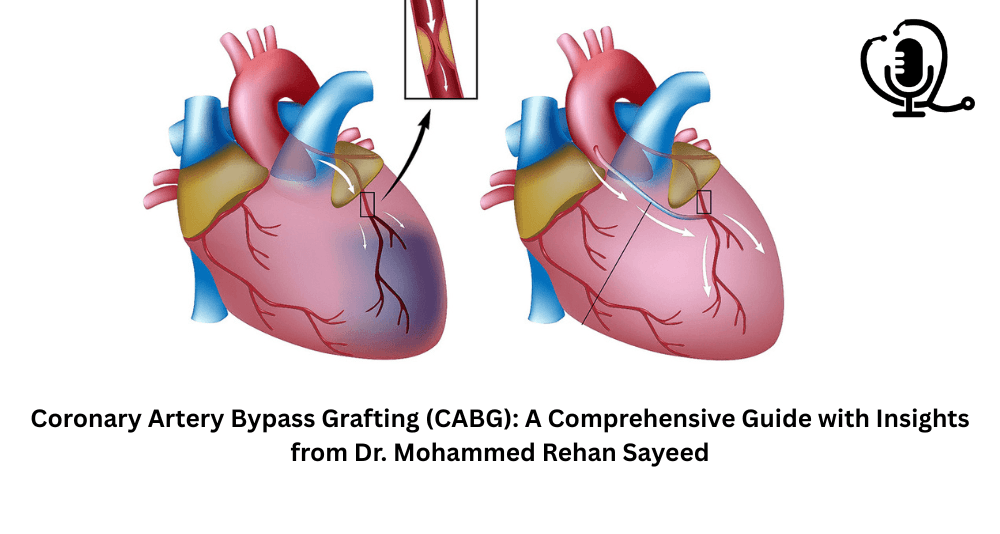
Coronary coronary artery condition (CAD) is among the main causes of death in the world. When changes in lifestyle and medication aren't enough, surgery may be suggested. One of these procedures is Coronary Artery Bypass Grafting (CABG) , which remains the gold standard for certain complicated heart diseases. This blog will explain how to perform the CABG procedure in detail, including its various types of indications, results, and recovery, in addition to extolling the remarkable work done by Dr. Mohammed Rehan Sayeed, a heart surgery pioneer.
What Is Coronary Artery Disease (CAD)?
Coronary arterial disease is a condition that manifests when the blood vessels that supply the heart become narrowed or blocked due to plaque build-up. This restricts circulation of blood towards heart muscle and causes chest pain (angina) and difficulties breathing and heart attack. If not treated, CAD could cause serious complications, like cardiac failure.
CAD is a result of atherosclerosis, a process in which cholesterol and fats and other substances accumulate in the arteries' walls. Over time, the plaques blocked the flow of blood and could break, leading to an unexpected heart attack.
Understanding Coronary Artery Bypass Grafting (CABG)
Coronary Artery Bypass Grafting (CABG) is a surgical procedure that increases circulation of blood to the heart through redirecting blood flow through blocked arterial arteries using grafts made from different areas of the body. It's among the most popular and effective treatments for severe CAD.
CABG surgery the surgeon will remove the blood vessels that are not injured within the patient's legs or chest. Then, the surgeon then joins it to the coronary artery which blocks it. This creates another path ("bypass") to let oxygen-rich blood flow into the heart muscle.
The procedure of CABG is recommended for patients who suffer from:
Blockages in a number of major coronary arteries.
CAD affects the coronary's left major.
Diabetes and Multivessel Disease.
Heart function is reduced due to prevalence of atherosclerosis.
How CABG Is Performed
The CABG process consists of several key steps:
Preparation and Anesthesia The patient is given general anesthesia.
The harvesting conduits Healthy vessels are harvested from patients in the following ways:
Intra mammary arterial (from inside the chest)
Aortic radial (from up to the arm's upper part)
Saphenous vein (from the leg)
bypass Grafting Surgery bypasses coronary arteries that are blocked by stitching grafts above or below block.
The return of blood flow After all grafts have been put in place, and blood flow has returned to vital regions of the heart.
The Rehabilitation Chest is closed as the patient is transported to the intensive care unit to be observed.
Conduits Used in CABG
The efficacy of bypass surgery is dependent on the durability of the vessels which are grafted
Internal Mammary Arteries Excellent long-term endurance (>90 percent after 10 years).
Radial Arteries Benefits over time usually used for younger patients.
Saphenous Veins Many people are using them, but they may have less capacity than the arteries.
An individual patient's choice is based on their age and a patient's body structure and overall health.
Benefits and Risks of CABG
Benefits
Increased blood flow and oxygen supply into the muscle of your heart.
Improved overall health: Reduced chest pain and improved endurance for exercise.
Higher survival rate: Especially in high-risk CAD patients.
Reduces signs and symptoms such as Shortness of breath and angina can be improved dramatically.
Risks and Complications
Like all surgeries, CABG has risks:
The wound is infected.
This condition is called atrial fibrillation (irregular heartbeat following the operation).
Stroke (less often but still serious).
Retinal dysfunction in predisposed patients.
However, CABG remains a safe and life-saving process when performed by experienced teams.
Recovery After CABG
The extent of recovery is based on the process:
Traditional CABG
Hospitalization is usually 5 to 7 weeks.
Complete recovery 6- 8 weeks.
Minimally Invasive CABG
Incisions that are smaller and require a smaller Hospitalization.
Speedier Return to routine activities usually within two months.
Lifestyle After Surgery
People are urged to think about healthy lifestyles for the heart:
A well-balanced food plan that is balanced (low intake of saturated fats sodium, trans fats, and saturated fats)
Regularly exercise according to the guidelines
Management of diabetes and blood pressure
Smoking cessation
Rehab programs help patients build confidence and strength.
Innovations in CABG: Minimally Invasive and Hybrid Approaches
As the field of cardiac surgery continues to evolve newer techniques are designed to achieve the best results while putting less strain on patients.
Minimally Invasive CABG
Also known as MIDCAB also known as MICS CABG which is a procedure that makes smaller incisions and does not require a need for a sternotomy. The advantages include:
Pain relief
More infections fewer
Rapider recovery
Better cosmetic outcomes
Hybrid Techniques
Mixing conventional bypass grafting techniques with stenting lets surgeons tailor the revascularization procedure to achieve optimal results, while also reducing the amount of invasiveness.
Dr. Mohammed Rehan Sayeed: A Leader in Cardiac Surgery
Dr. Mohammed Rehan Sayeed is an extremely experienced and internationally renowned cardiovascular & Vascular surgeon. With more than two decades of dedicated service, he offers modernized surgical procedures for cardiac surgery especially for coronary revascularization.
Educational and Professional Profile
Medical education consists of MBBS, M.S in General Surgery, FRCS from The Royal College of Surgeons of Edinburgh and DNB on Cardiothoracic Surgery. A variety of international fellowships and experiences in clinical practice with Boston, Cleveland, and some of the most prestigious hospitals have helped shape his surgical perspective.
Over 27 years experience in specialized expertise in pediatric and adult cardiothoracic surgery.
Areas of Expertise
Dr. Rehan's specialties go beyond CABG:
Minimally invasive and robotic heart surgery
Repair and replacement of valves
Transplantation of the heart and lung
Ventricular assist devices
Aortic surgery
Procedures for pediatric cardiac surgery
This expertise is what allows him to be particularly adept in complicated coronary revascularization which includes patients with high risk factors or multivessel diseases.
Dr. Rehan's Approach to CABG and Patient Care
"Dr. Rehan's approach to healthcare is a mix of technology and innovation with the demands of the patient at the forefront.
a. Precision and Innovation
Dr. Rehan has been at the forefront of developing and implementing minimally invasive hybrid surgical procedures in India which have aided in speeding recovery time and lessen trauma.
b. Personalized Treatment Plans
Every patient is assessed thoroughly. The surgical plans are tailored to anatomy and also co-morbidities (such as the condition of diabetes) and lifestyle preferences.
c. Education and Empowerment
Dr. Rehan believes in giving patients insight and information. She offers treatment options, along with the potential risks, and also the expected results. This increases confidence and increases participation in the rehabilitation process.
d. Patient Testimonials
Patients frequently review his surgical knowledge and expertise and his compassionate care. Many have positive experiences following CABG with other heart procedures.
Coronary arterial disease poses an immense threat to overall health of the cardiovascular. Coronary Artery Bypass Grafting (CABG) remains a vital component in the treatment of complex CAD, and can provide significant improvements in terms of quality of life and the length of life. It can be done either in a traditional manner or with the most sophisticated minimally invasive methods, CABG provides patients with a means to improve the health of their heart.
With the assistance of experienced surgeons like Dr. Mohammed Rehan Sayeed, CABG is performed with a commitment to the latest technology, surgical excellence and a treatment-focused approach for patients. His years of training in the world and specialization of advanced surgery for the heart, continue to enhance the life of the patients which makes heart surgery safer and efficient, and accessible.
In the event that you, or a loved one, are considering the procedure of CABG or are seeking an opinion from a specialist regarding heart disease, having a thorough awareness of the possibilities offered and working with experienced heart teams is vital. With leaders like Dr. Rehan, there is optimism, understanding, and excellence in every step on the road to heart health.
Frequently Asked Questions (FAQs) on Coronary Artery Bypass Grafting (CABG)
1. What is Coronary Artery Bypass Grafting (CABG)?
Coronary Artery Bypass Grafting (CABG) is a heart surgery performed to restore adequate blood flow to the heart muscle. It involves using healthy blood vessels (grafts) taken from the chest, arm, or leg to bypass blocked or narrowed coronary arteries.
2. Why is CABG recommended instead of medicines or stents?
CABG is recommended when:
Multiple coronary arteries are blocked
The left main coronary artery is significantly narrowed
Angioplasty or stenting is not suitable or has failed
The patient has diabetes with multivessel coronary disease
CABG provides better long-term survival and symptom relief in such cases.
3. Who needs CABG surgery?
CABG is usually advised for patients who have:
Severe chest pain (angina) not controlled by medication
Multiple blocked coronary arteries
Reduced heart pumping function
High risk of heart attack
The decision is based on angiography findings and overall patient health.
4. How is CABG different from angioplasty (stenting)?
Angioplasty opens blocked arteries using balloons and stents, while CABG creates a new pathway for blood flow using grafts. CABG is generally more durable for complex and extensive coronary disease, especially in diabetic patients.
5. What blood vessels are used for bypass grafting?
Commonly used grafts include:
Internal Mammary Artery (IMA) from the chest (most durable)
Radial artery from the arm
Saphenous vein from the leg
Arterial grafts usually last longer than vein grafts.
6. What is the difference between on-pump and off-pump CABG?
On-pump CABG: Uses a heart-lung machine; the heart is temporarily stopped.
Off-pump CABG: Performed on a beating heart without a heart-lung machine.
Off-pump CABG may reduce certain complications in selected patients.
7. Is CABG a high-risk surgery?
CABG is a major surgery, but with modern techniques and experienced surgeons, it is considered safe. The risk depends on age, heart function, diabetes, kidney disease, and overall health.
8. How long does CABG surgery take?
CABG surgery usually takes 3 to 5 hours, depending on:
Number of bypasses required
Type of surgery (traditional or minimally invasive)
Patient anatomy and complexity
9. How many days will I stay in the hospital after CABG?
ICU stay: 1–2 days
Total hospital stay: 5–7 days (traditional CABG)
Minimally invasive CABG may allow earlier discharge.
10. What is the recovery time after CABG?
Initial recovery: 2–3 weeks
Full recovery: 6–8 weeks (traditional CABG)
Patients undergoing minimally invasive CABG may recover faster.Will I have pain after CABG surgery?
11. Will I have pain after CABG surgery?
Some discomfort is normal, especially at the chest incision site. Pain is managed effectively with medications and reduces significantly within a few days.
12. What lifestyle changes are required after CABG?
After CABG, patients should:
Follow a heart-healthy diet
Quit smoking
Exercise regularly (as advised)
Control blood pressure, cholesterol, and diabetes
Take prescribed medications consistently
These steps help ensure long-term success of the bypass grafts.
13. Can CABG cure heart disease permanently?
CABG improves blood flow and relieves symptoms, but it does not cure atherosclerosis. Long-term success depends on lifestyle changes and medical management.
14. What complications can occur after CABG?
Possible complications include:
Infection
Irregular heart rhythm (atrial fibrillation)
Bleeding
Stroke (rare)
Kidney dysfunction (in high-risk patients)
Most complications are preventable or manageable with expert care.
15. Is minimally invasive CABG safe and effective?
Yes, for selected patients. Minimally invasive CABG offers:
Smaller incisions
Less pain
Faster recovery
Lower infection risk
Not all patients are candidates; suitability depends on coronary anatomy.
16. Can elderly patients undergo CABG safely?
Yes. Age alone is not a contraindication. Many elderly patients undergo CABG safely when evaluated and optimized properly.
17. When can I return to work after CABG?
Most patients can return to light work in 4–6 weeks. Physically demanding jobs may require a longer recovery period.
18. Will I need medicines even after CABG?
Yes. Medications such as:
Blood thinners
Cholesterol-lowering drugs
Blood pressure medicines
are essential to protect grafts and prevent future blockages.
19. How successful is CABG surgery?
CABG has a high success rate with excellent long-term outcomes, especially when performed by experienced cardiac surgeons. It significantly improves survival, quality of life, and exercise capacity.
20. Why choose Dr. Mohammed Rehan Sayeed for CABG?
Dr. Mohammed Rehan Sayeed is known for:
Over two decades of cardiac surgical expertise
Advanced training in minimally invasive and complex cardiac surgery
Patient-centered and evidence-based care
Excellent outcomes in high-risk and complex CABG cases
His approach combines precision surgery, innovation, and compassionate care.