Dec 8, 2025
Angioplasty vs. Bypass Surgery: Which Treatment Is Right for You?


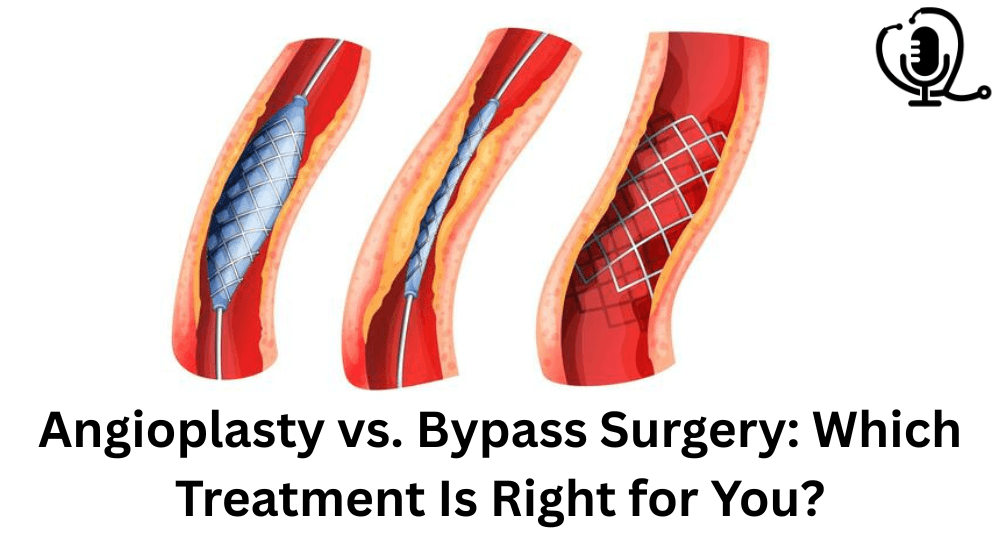
The most effective method of treating coronary artery disorders (CAD) is one of the most important choices that a patient and their physician take. When the arteries which provide the muscle of your heart are blocked or blocked, two options that can save lives in the light: Angioplasty (also referred to as percutaneous Coronary Intervention (PCI) also known as PCI) or Coronary Artery Bypass Grafting (CABG). Both procedures are intended to restore circulation, however they address the issue with distinct techniques. The first is a minimally-invasive procedure, while the other is a standard open-heart surgery.
This comprehensive guide explains the particulars of each procedure. It examines the advantages of each and examines the most crucial factors -- from the complexity of anatomical structures to the recovery times -- that determine which is the best option to you. The emphasis is on describing the procedure and results of the procedure known as angioplasty. It will also provide a comprehensive overview of bypass surgery.
Coronary Artery Disease (CAD): Understanding the Blockage Problem
At the heart of the Angioplasty-vs.-Bypass debate is Coronary Artery Disease (CAD). The condition progresses and is a life-threatening illness in which blood vessels that supply essential oxygen and nutrients to the muscles that are the heart (the coronary arterial) are widened and hardened.
The Genesis of CAD: Atherosclerosis
The most frequent cause of blame is atherosclerosis. It is generally defined as "hardening in the arteries. " This happens due to the accumulation of fat deposits, cholesterol and other cell wastes together with calcium and fibrin in the arterial wall. It results in a substance known as plaque.
plaque growth With time the plaque continues to increase, which causes the wall of the artery to thicken and lose their elastic.
Stenosis (Narrowing) The expanding plaque narrows the channels that circulate through blood vessels. This is known within the medical world as stenosis. A blockage above 70% is usually considered to be enough to cause symptoms.
Signs and symptoms The decreased blood circulation (ischemia) can cause chest pain. It is also known as angina pectoris especially during exercise in which the heart muscle needs more blood flow.
It's an acute incident. One of the most dangerous situations occurs when a plaque ruptures. The body's clotting system begins creating the"thrombus" (blood as well as clots) over the region which has ruptured. If the blockage of an arterial occurs and causes the body to experience an acute myocardial injury (heart attack) which can cause irreparable damage to the muscles of the heart.
The principal goal of every procedure, for instance, Angioplasty (also called CABG) will be to eliminate or reduce the effect of these important blockages which reduce symptoms and help reduce the risk of heart attacks. They also increase their health and prolong their lives.
Angioplasty (PCI): The Minimally Invasive, Balloon-and-Stent Solution
Angioplasty, officially called PCI, also known as Percutaneous Coronary Intervention (PCI), represents the most innovative, minimally invasive treatment for CAD. The word "percutaneous" refers to the procedure performed via the skin, usually through small incisions made within the wrist (radial artery) or in the incision of the groin (femoral artery) which eliminates the requirement for a huge surgical cut.
The Core Concept of Angioplasty
The main objective in Angioplasty is to force the atherosclerotic plaque to the outside by widening the artery from within and then constructing an ongoing scaffold to keep it open.
The Role of the Stent
The phrase Angioplasty technically refers to using balloons to increase the size of an artery. The procedure today is identical to using a stent.
What exactly is a stent? A stent is an extremely small wire mesh tube that is typically composed from the alloy of stainless steel, or cobalt and chrome. It functions as a long-lasting scaffold.
Preventing Restenosis Stents that are modern in design and function nearly entirely drugs-eluting (DES) stents (DES). They are coated with a medication which is released slowly over a period of time directly into the wall of the artery. This is vital because it stops the development of scar tissue (neointimal hyperplasia) which could lead to the arterial system becoming narrow once more, a condition that is known as restonosis. The popularity of the modern Angioplasty can be mostly attributable to the development of these drug-eluting technologies.
The main benefits of angioplasty is its speed, the low risk of injury to the human body and the rapid return to normal activity it offers to the majority of patients. For most patients, it's an immediate or next-day discharge procedure.
The Procedure: How Angioplasty Opens Your Arteries
Understanding the processes that are involved in Angioplasty will allow you to comprehend why it is thought to be not invasive at all and the way it permits blood flow. The procedure is performed in a specially-designed operating room referred to in the heart catheterization lab (cath lab) and can take anything from 30 minutes to several hours, depending on the extent of obstruction.
Step-by-Step Angioplasty
Access and Catheter Injection The patient is administered an in-person sedative to the access point (wrist or groin). The cardiologist makes a small puncture, and then inserts the sheath which is a plastic tube that is used as an access point. Sheaths are long hollow tubes with a flexible shape, called the guide catheter. It is then introduced into the artery organs of your body, until its tip reaches the coronary artery that is close to the heart.
Wire Positioning and Angiograms Wire Positioning: A specific contrast dye is introduced into the catheter. Utilizing X-rays that are real-time ( the fluoroscopy) the doctor can view the dye flowing across the coronary vessels, clearly showing the exact extent and where the obstructions are. This is known as an Angiogram. Once the blockages are identified, a soft flexible lead wire is placed by hand over the obstruction. It functions as a rail track for balloons and stents.
Inflating the balloon (The Angioplasty Step): A specially-designed balloon catheter - with the stent affixed to its tip--is advanced through the guide wire until the balloon/stent is within the region of obstruction. The balloon is ballooned up to a large tension (usually between 8 and 20 atmospheres). The pressure then is increased to press the hard plaque into its wall which will restore the artery's lumen (opening) which is the artery.
Stent deployment As the balloon expands, this causes the stent that is made from wire mesh, to grow in size which allows it to be secured against the walls of the arterial.
Complete Deflated: The balloon is removed and removed, leaving the permanent stent in place to help keep the arterial artery in place, and to ensure the blood flow. The guide wires remaining are taken off and pressure is imposed on the puncture to stop the bleeding.
The speed at which the result is achieved, namely relief of blockage is one of the most important benefits of Angioplasty. The stent itself is a permanent fixture. The duration of the procedure relies heavily on the commitment by patients to lifelong regimen of anti-platelet medication (such as aspirin or P2Y12 inhibitor) to stop the development of clots within the stent.
Coronary Artery Bypass Grafting (CABG): The Traditional Surgical Re-route
Coronary Artery Bypass Grafting (CABG) is often known as "bypass surgery," is an important, conventional open-heart surgery. Contrary to Angioplasty which repairs the pathway that was originally blocked, CABG creates an entirely new route to allow blood flow around the obstruction.
The Mechanism of Bypass Surgery
CABG is unable to remove the plaque. Instead, it makes healthy blood vessels a graft from an additional part of the body (most often the internal mammary vein from the chest wall or veins of the legs).
Access to Surgery: The procedure typically involves a sternotomy in which the bone of your breast (sternum) is cut to reach the heart.
The Cardiopulmonary Bypass: The heart is usually stopped and the heart-lung apparatus (cardiopulmonary bypass) is utilized to perform the duties of the lungs and heart by circulating and oxygenating blood during the time that the surgeon is working. (Newer methods, referred to as "off-pump" or "beating-heart" surgery, can permit this procedure to be carried out in a way that does not stop the heart).
Graft Attachment The surgeon carefully attaches an end of the graft to the Aorta (the principal blood vessel that leaves the heart) and the other onto the coronary arterial over that point at which there is critical blockage. This effectively removes this narrowed section.
Restored Flow The oxygenated blood flows through the new, clear passageway (the graft) totally avoiding the plaque-filled, diseased section and restoring the robust, unimpeded flow of blood towards the cardiac muscle.
Although significantly more injurious, CABG is a highly long-lasting and effective option, especially for patients with complex, severe or diffuse diseases which would be challenging or untreatable using individual stents. The decision to suggest CABG over angioplasty is usually influenced by the degree and severity of CAD.
Indications and Complexity: When is Angioplasty Chosen Over Bypass?
The most important element that is crucial in Angioplasty or. CABG debate is the patient's coronary anatomy. The choice is seldom solely based on the physician's preference and is influenced by extensive clinical trials and established guidelines in cardiology which focus on safety of the patient's longevity, long-term viability, and the absence of recurrent symptoms.
The Role of the SYNTAX Score
One of the standard tools employed to make this determination can be an instrument called the SyNTAX Score. It is a thorough evaluation of the numerical degree of CAD the patient has that takes into consideration:
It is the number of blood vessels affected (one two or three vessels disease).
The site of obstructions (especially those that affect The Right Main Artery, which is responsible for 75 percent from the center).
Coronary artery function status.
The degree of calcification and the extent of calcification and.
A greater SYNTAX score suggests more difficult or widespread and anatomically complicated disease.
Key Scenarios for Treatment Choice
Scenario | Best Indication | Rationale |
Simple, Single-Vessel Blockage | Angioplasty (PCI) | Fast, safe, minimal surgery. Long-term results that are comparable to surgery for lesions that are not complex. |
Acute Heart Attack (STEMI) | Angioplasty (PCI) | This requires immediate re-opening of the artery responsible ( Primary PCI) to limit the damage to muscles. It is the quickest method to restore flow. |
Left Main Artery Disease | CABG (Historically) or PCI (selectively) | The left main artery is the largest. CABG was historically a better option for long-term outcomes, but current Angioplasty has become currently an acceptable option for patients who have SYNTAX scores that are moderate to low Scores in SYNTAX. |
Complex, Multi-Vessel Disease (High SYNTAX) | CABG | Multiple or lengthy lesions can be difficult to address using multiple stents. CABG provides more durable, complete revascularization. |
Multi-Vessel Disease + Diabetes | CABG | Studies such as that of FREEDOM Trial showed that for patients with CAD that is complex for diabetics, CABG provided a significant survival benefit and reduced rates of repeat procedures as compared against angioplasty. |
Diffuse Disease | CABG | If the entire length of the artery is infected instead of a single focal blockage, there's no ideal target for the placement of stents which makes a bypass necessary. |
In most cases, Angioplasty is the preferred choice for patients with simple to moderate complex blockages and in emergencies (heart attacks). CABG is only for patients with more complicated coronary anatomy, especially those with risky features such as left main disease, or those who have co-existing medical conditions such as diabetes, in which the long-term durability and completeness of bypass provide a distinct benefit.
Recovery and Hospital Stay: Comparing Time Off and Healing
A major and apparent and noticeable distinction between these both procedures lies in the recuperation rate which can have a significant impact on the decision-making process of a patient. The distinction between a low-invasive Angioplasty or an open-heart procedure of this magnitude like CABG is huge.
The recovery process following Angioplasty (PCI)
The recovery process from angioplasty is very rapid, highlighting its status as a minimally-invasive procedure:
Hospitalization: Patients typically require an overnight stay to observe (24 days). For cases that are simple and elective certain centers are making strides towards same-day discharge.
Immediate Post-Procedure The most important thing to consider is to monitor the site of puncture (wrist or the groin) for any bleeding. Patients are usually required to lie on their backs for a couple of hours in the event that the femoral vein was used.
Back to Work The majority of patients are able to resume normal, non-stretch activities within 24 to 48 hours. They usually are back at work (if they are not physically) after 1 week. Driving restrictions are usually only a few hours.
Physical trauma: It is almost impossible to cause physical injury to the chest, heart or the tissues around it and this results in a minimal amount of pain that is easily treated with prescription painkillers.
The speedy recovery is a huge benefit for those who are active and young or those who can't afford to take a long break from their family or work.
Rehabilitation of Bypass Surgery (CABG)
CABG, major surgery, requires the patient to undergo a much longer and more intense recovery period:
Hospitalization: The typical stay ranges from five to seven days which includes a compulsory time within the Cardiac Intensive Care Unit (CICU) for the initial assessment.
immediate post-surgery: The patient will feel soreness and pain due to the sternotomy (chest incision) and the site of the graft harvest (leg/arm). Pain management is a top priority and requires prescription medications for a period of time.
Retour to activity Patients must follow the sternal precautions for 6-8 weeks in order for the bone to recover. It is not recommended to lift heavy weights or push. Recovery to full capacity, including the ability to resume the normal routine of work and activities generally is six to twelve weeks.
Cardiac Rehabilitation Both therapies benefit from a formal cardiac rehabilitation. However, it is an integral part of CABG recovery aiding patients in regaining the strength and endurance lost through the hospital stay and surgery.
The lengthy recovery time and the traumatic experience that comes by sternotomy are main factors that affect the longevity that bypass surgery can provide in complicated cases.
Long-Term Outcomes: Effectiveness, Durability, and Re-Intervention Risks
The decision of Angioplasty or CABG can be one of the most important decisions regarding the long-term health of your heart, which involves evaluating the efficacy and long-term durability of each. Long-term outcomes are assessed through the likelihood of needing another procedure, the frequency in the event of major adverse events in the cardiac system (MACE) and the overall survival.
Durability and Restenosis in Angioplasty
Achilles' heel of the earlier Angioplasty procedures was the high incidence of restonosis--the shrinking of the stented artery due to the aggressive growth of scar tissue.
Drug-Eluting Stents (DES): The development of DES has significantly enhanced the long-term endurance for Angioplasty. Modern DES have decreased the rate of restenosis to low single-digit percentages (2-5 percent) in lesions that are simple.
Need for Re-intervention Despite these improvements complicated lesions treated using stents, particularly in diabetic patients, are still at risk of the chance in the event of failure (re-stenosis or new blockages that form elsewhere) in comparison the bypass grafts. Failure of Angioplasty necessitates an additional procedure. This could involve a different Angioplasty and possibly CABG.
Durability of Bypass Grafts
CABG provides exceptional long-term stability (remaining open) especially during the time that an Internal Mammary Artery (IMA) is used as an artery bypassing the left Anterior Descending (LAD) coronary artery, which is the most vital arterial.
Arterial Grafts The IMA Graft has a high 10-year patency rate, typically over 90-95%. This is regarded as the most durable graft in the field of revascularization.
Venous Grafts Venous grafts derived directly from your legs (saphenous vein) are less long-lasting, with patency drops to 50-60 percent after 10 to 15 years. This is because they are more susceptible to developing atherosclerosis.
In controlled clinical trials that compared the two therapies (like EXCEL and the SYNTAX as well as the EXCEL studies), CABG generally demonstrated a lower chance of repeat revascularization for 5 to 10 years, especially for patients suffering from multi-vessel disease. It means that, while bypassing is a more initial commitment, it is most likely to become more of a "one-and-done" fix for certain high-risk patients. For less complicated situations, the long-term results of the modern Angioplasty and CABG are usually comparable.
Making the Final Decision: Which Treatment Path is Best for Your Heart Health?
The final decision between angioplasties or bypass surgery is a personal decision that should not be taken without much thought. It's about considering the immediate risks and longevity and health. The optimal treatment option for an individual patient is determined by an integrated review of clinic information, anatomical considerations, and individual preferences.
Key Factors for the Patient to Consider
Anaatomic Complexity The primary element. Simple CAD is a major reason for angioplasty. Complex, multi-vessel diseases favor CABG.
Collaborative diseases: People with severe chronic kidney disease, diabetes or heart failure are often more benefited by the complete revascularization that is offered by CABG. On the other hand, patients who are frail or suffer from severe lung disease could be at risk of a prohibitively high risk of major open-heart surgery, which makes an Angioplasty the most secure, though more susceptible to failure, choice.
The age of the patient and their life expectancy For patients who are very old or those who have a very limited lifespan, the difficulty of CABG recovery might not be justified. This makes angioplasty recovery more attractive. For patients younger than that long-term, the durability of CABG is useful.
Patients' Preferences and Lifestyle The patient's preference to avoid surgical procedures open to the public, or the desire for rapid return to work, could alter the decision towards Angioplasty when there are instances that clinical evidence suggests similar results. An ongoing commitment to anti-platelet therapy is not a matter of choice for any patient undergoing an angioplasty.
The Role of the Heart Team
Modern standards of care require a single doctor not to make that choice. An "Heart Team"--comprised of an interventional cardiologist (who does angioplasties) as well as the cardiothoracic surgeon (who is responsible for CABG)--reviews every patient's medical records including the angiogram as well as the SYNTAX score. They review the patient's medical history together and then present a unanimous recommendation to the patient making sure the final decision is fact-based, objective and specific to the specific circumstances of the patient.
After all, Angioplasty is a major medical breakthrough. It is a safe, extremely effective as well as minimally-invasive process that's the preferred treatment for acute heart attacks as well as blocks that are less complicated. CABG is the most effective treatment for complex and extensive diseases, offering an extra-strong and long-lasting option for the most dangerous anatomies. The choice you make is a significant collaboration making sure that the treatment you choose will yield the highest quality of health outcomes for your heart.
Frequently Asked Questions
What is the main difference between Angioplasty (PCI) and Bypass Surgery (CABG)?
A: The main difference lies in the method of restoring blood flow:
Angioplasty (PCI): This is a minimally invasive procedure that uses a balloon to flatten the plaque and a stent (a metal mesh tube) to prop the blocked artery open from the inside, restoring the original flow path.
Bypass Surgery (CABG): This is a major surgery that creates a new pathway, or "bypass," around the blockage using a healthy blood vessel (graft) taken from another part of the body.
Is Angioplasty considered a form of heart surgery?
A: No. Angioplasty is a minimally invasive interventional procedure, not open-heart surgery. A cardiologist performs it in a catheterization lab via a small puncture (usually in the wrist or groin), requiring no large incision.
How is the decision between Angioplasty and CABG?
A: The decision is guided by the patient's coronary anatomy (number, severity, and location of blockages), co-existing conditions (like diabetes), and overall health. Physicians use tools like the SYNTAX score to assess complexity.
Angioplasty is generally preferred for less complex, single-vessel blockages, and is the standard emergency treatment for acute heart attacks.
CABG is generally preferred for complex, multi-vessel disease (especially involving the left main artery) and in patients with diabetes, where it offers superior long-term durability.
Which procedure has a faster recovery time?
A: Angioplasty has a significantly quicker recovery time.
Angioplasty: Hospital stay is typically 1 day or less. Patients can usually resume light activities within 48 hours and return to work within a week.
CABG: Hospital stay is typically 5 to 7 days, followed by 6 to 12 weeks of recovery at home, requiring adherence to sternal precautions.
How long does an Angioplasty procedure take?
A: A routine, elective Angioplasty with stent placement usually takes between 30 minutes to 2 hours, depending on the number and complexity of the blockages being treated.
What are the biggest risks associated with Angioplasty?
A: While generally safe, the main risks of Angioplasty include bleeding or damage at the access site, kidney damage from the contrast dye, and a risk of restenosis (re-narrowing of the artery) or thrombosis (clot formation) within the stent. These risks are mitigated by modern drug-eluting stents and mandatory post-procedure anti-platelet medication.
Which treatment is more durable in the long run?
A: For patients with complex, multi-vessel coronary artery disease, CABG generally offers a more durable solution and a lower risk of needing repeat procedures over a 5-to-10-year period, particularly when arterial grafts are used.
For patients with simple or single-vessel disease, the long-term durability and survival rates of modern angioplasty with drug-eluting stents are often comparable to CABG.
Will I need medication after Angioplasty?
A: Yes. After Angioplasty with stent placement, you must take a combination of anti-platelet medications (like Aspirin plus a P2Y12 inhibitor such as Clopidogrel) for a prescribed period. This is crucial to prevent blood clots from forming inside the stent, which could lead to a catastrophic heart attack.
If Angioplasty fails, can I still have Bypass Surgery?
A: Yes. If an artery treated with Angioplasty re-narrows (restenosis) or if new, complex blockages develop, Bypass Surgery (CABG) remains a viable option. Often, CABG is the recommended treatment following a failed or inadequate Angioplasty in complex anatomy.