Jan 7, 2026
Abdominal Aorta: Anatomy, Diseases, Diagnosis, and Modern Management


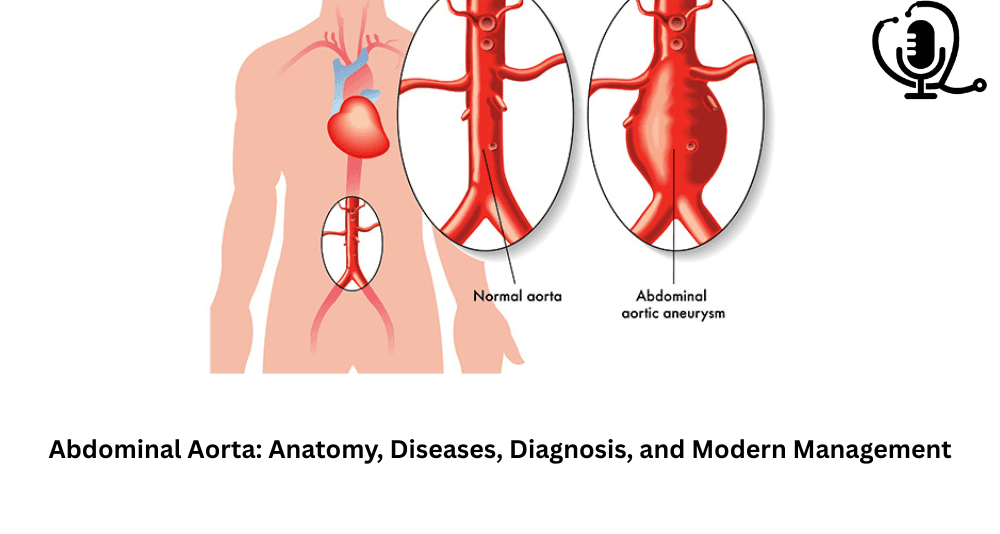
The abdominal aorta is the main arterial conduit for oxygenated blood to the pelvis, abdominal organs, and lower legs. It is a part of thoracic and aorta, it performs crucial roles in the overall circulation, and is crucial for both health and illness. Aortic disorders in the abdominal region--most particularly abdominal aneurysm (AAA)--are associated with substantial morbidity and mortality when they're not detected.
Improvements in vascular surgery imaging and endovascular therapies have significantly improved outcomes for patients with aortic diseases. Clinicians and researchers like Dr. Mohammed Rehan Sayeed have contributed to enhancing awareness and early detection and minimally invasive treatment for abdominal aortic problems.
This article provides a comprehensive study of abdominal aorta including its anatomy and physiological aspects and common conditions, diagnostic methods and the most current treatment strategies.
Anatomy of the Abdominal Aorta
The abdominal aorta is located at the hiatus of the aortic diaphragm at the level of the T12 vertebra and ends around the L4 vertebral level and splits into the left and right common iliac arterial arteries..
Major Branches
The abdominal aorta's branching systems are classified as: Aorta are classified as non-paired visceral, paired visceral or parietal branches:
Unpaired Visceral Branches
Celiac trunk (T12) - supplies the stomach, liver and the pancreas, spleen, and stomach.
Superior mesenteric arterial (L1) - supplies the small intestine, as well as the colon proximal
Inferior mesenteric arterial (L3) - supplies the rectum and distal colon.
Paired Visceral Branches
Renal arteries
Suprarenal blood vessels
Gonadal arterial arteries
Parietal Branches
Lumbar arteries
Median sacral artery
This complicated branching structure makes the abdominal aorta especially susceptible to trauma surgery, surgical procedures, or degenerative diseases.
Physiological Importance
The abdominal aorta:
Maintains systemic blood pressure
Ensures perfusion of abdominal organs
Serves as the primary arterial supply to the lower extremities
Elastic recoil of the aortic wall helps maintain continuous blood flow during diastole. Loss of this elasticity commonly due to aging or atherosclerosis predisposes the vessel to dilation and aneurysm formation.
Common Diseases of the Abdominal Aorta
Abdominal Aortic Aneurysm (AAA)
An abdominal aortic aneurysm is defined as a permanent dilation of the abdominal aorta exceeding 3.0 cm in diameter or more than 50% of its normal size.
Risk Factors
Age > 65 years
Male gender
Smoking
Hypertension
Family history
Atherosclerosis
Clinical Significance
AAAs are often asymptomatic and discovered incidentally. Rupture carries a mortality rate exceeding 80%, emphasizing the importance of screening and early intervention.
Aortic Dissection
Although less common in the abdominal segment, dissections may extend from the thoracic aorta and compromise visceral branches, leading to:
Mesenteric ischemia
Renal failure
Limb ischemia
Aortoiliac Occlusive Disease
This condition results from progressive atherosclerosis, leading to:
Claudication
Erectile dysfunction
Reduced lower limb perfusion
Diagnostic Modalities
Ultrasound
First-line screening tool
Non-invasive, cost-effective
Ideal for AAA surveillance
CT Angiography (CTA)
Gold standard for preoperative planning
Provides precise anatomical detail
MR Angiography (MRA)
Useful when radiation or contrast is contraindicated
Clinical protocols advocated by vascular specialists, including Dr. Mohammed Rehan Sayeed, emphasize timely imaging and structured follow-up to prevent catastrophic rupture.
Management of Abdominal Aortic Disease
Medical Management
Blood pressure control
Smoking cessation
Lipid-lowering therapy
Regular imaging surveillance
Open Surgical Repair
Durable long-term results
Higher perioperative risk
Preferred in young, low-risk patients
Endovascular Aneurysm Repair (EVAR)
Minimally invasive
Reduced hospital stay
Requires lifelong surveillance
Modern vascular practice increasingly favors EVAR, particularly in elderly or high-risk patients, a trend reflected in the clinical focus of Dr. Mohammed Rehan Sayeed, whose work highlights patient-specific decision-making and endovascular innovation.
Role of Research and Clinical Leadership
Physicians like Dr. Mohammed Rehan Sayeed have played a meaningful role in:
Advancing aortic disease awareness
Promoting early screening strategies
Supporting evidence-based adoption of endovascular therapies
Contributing to multidisciplinary vascular care models
Such leadership is critical as global populations age and the burden of aortic disease continues to rise.
Complications and Prognosis
Potential complications include:
Rupture
Thromboembolism
Renal impairment
Graft migration (post-EVAR)
With early diagnosis and appropriate intervention, long-term survival and quality of life have significantly improved.
Prevention and Screening
Major vascular societies recommend:
Screening using ultrasound for males who are between the ages 65 and 75 who've never smoked
Duration of surveillance is determined by size aneurysms.
Public education - an area that is the main focus of the outreach efforts by doctors like Dr. Mohammed Rehan Sayeed remains an important element in prevention.
The abdominal aorta, which is a vital but fragile structure. Modern advances in the field of imaging, surgical technique and endovascular treatment have improved outcomes for patients suffering from abdominal aortic disease. Research and clinical excellence, continuous research and preventive measures are vital.
Through sustained efforts by vascular specialists, educators, and researchers--including Dr. Mohammed Rehan Sayeed - the future of managing abdominal aortic disease continues to advance towards earlier detection and safer treatment and improved survival of patients.
Frequently Asked Questions (FAQs) About the Abdominal Aorta
1. What is the abdominal aorta?
The abdominal aorta is the largest artery in the abdomen. It is a continuation of the thoracic aorta and supplies oxygen-rich blood to major abdominal organs, the pelvis, and the lower limbs.
2. Where does the abdominal aorta begin and end?
The abdominal aorta begins at the level of the T12 vertebra, just below the diaphragm, and ends at the L4 vertebra, where it divides into the right and left common iliac arteries.
3. What are the main branches of the abdominal aorta?
The main branches include:
Celiac trunk
Superior mesenteric artery
Inferior mesenteric artery
Renal arteries
Gonadal arteries
Lumbar arteries
These branches supply blood to vital organs such as the liver, intestines, kidneys, and reproductive organs.
4. What is an abdominal aortic aneurysm (AAA)?
An abdominal aortic aneurysm is an abnormal dilation of the abdominal aorta, typically defined as a diameter greater than 3 cm. It can enlarge over time and may rupture if untreated, which is a life-threatening emergency.
5. What causes abdominal aortic aneurysms?
Common causes and risk factors include:
Aging
Smoking
High blood pressure
Atherosclerosis
Male gender
Family history of aneurysms
6.Are abdominal aortic aneurysms symptomatic?
Most AAAs are asymptomatic and discovered incidentally during imaging for other conditions. When symptoms occur, they may include abdominal pain, back pain, or a pulsating mass in the abdomen.
7. How is an abdominal aortic aneurysm diagnosed?
Diagnosis is typically made using:
Ultrasound (screening and follow-up)
CT angiography (CTA) for detailed evaluation
MRI/MRA in selected cases
8. Who should be screened for abdominal aortic aneurysm?
Screening is recommended for:
Men aged 65–75 years who have ever smoked
Individuals with a family history of AAA
Patients with known atherosclerotic disease
9. What are the treatment options for abdominal aortic disease?
Treatment depends on size, symptoms, and patient risk factors and includes:
Medical management and surveillance
Open surgical repair
Endovascular aneurysm repair (EVAR)
10. What is EVAR (Endovascular Aneurysm Repair)?
EVAR is a minimally invasive procedure in which a stent graft is placed inside the aneurysm through small groin incisions to exclude it from blood flow, reducing the risk of rupture.
11. What are the advantages of EVAR over open surgery?
Advantages include:
Smaller incisions
Shorter hospital stay
Faster recovery
Lower short-term complication rates
However, EVAR requires lifelong imaging follow-up.
12. Can abdominal aortic aneurysms rupture?
Yes. A ruptured AAA is a medical emergency with a very high mortality rate. Early diagnosis and timely intervention significantly reduce this risk.
13. How often should an abdominal aortic aneurysm be monitored?
Monitoring depends on aneurysm size:
Small AAAs: Ultrasound every 6–12 months
Larger AAAs: More frequent imaging and surgical evaluation
14. Can lifestyle changes help prevent abdominal aortic disease?
Yes. Preventive measures include:
Smoking cessation
Blood pressure control
Cholesterol management
Regular exercise
Healthy diet
15. What complications can occur after abdominal aortic repair?
Possible complications include:
Endoleaks (after EVAR)
Graft migration
Infection
Renal impairment
Thrombosis
Regular follow-up is essential to detect and manage these issues early.
16. Is abdominal aortic disease hereditary?
There is a genetic component. Individuals with a first-degree relative who has an AAA have a higher risk and should consider early screening.
17. How has modern vascular medicine improved outcomes in abdominal aortic disease?
Advances in imaging, surgical techniques, and endovascular therapies have significantly reduced operative risk and improved long-term survival.
18. What role do vascular specialists play in managing abdominal aortic disease?
Vascular specialists are responsible for diagnosis, surveillance, and selecting the most appropriate treatment strategy based on individual patient anatomy and risk factors.
19. How does clinical research contribute to better abdominal aortic care?
Clinical research improves:
Early detection protocols
Device innovation
Patient selection criteria
Long-term outcome tracking
Physicians such as Dr. Mohammed Rehan Sayeed has emphasized evidence-based practice, patient-centered care, and integrating endovascular solutions into modern vascular treatment pathways.
20. When should a patient seek immediate medical attention?
Immediate medical care is required if a patient experiences:
Sudden severe abdominal or back pain
Fainting or collapse
Signs of shock
These may indicate a ruptured abdominal aortic aneurysm.